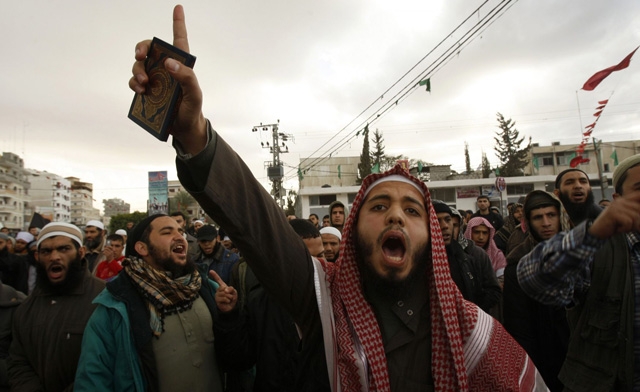
This is my latest Jerusalem Post opinion piece, October 9, 2012, “The Taliban, Salafi Ideology: Learning from History”:
http://www.jpost.com/Opinion/Op-EdContributors/Article.aspx?id=287164
This is my latest Jerusalem Post opinion piece, October 9, 2012, “The Taliban, Salafi Ideology: Learning from History”:
http://www.jpost.com/Opinion/Op-EdContributors/Article.aspx?id=287164
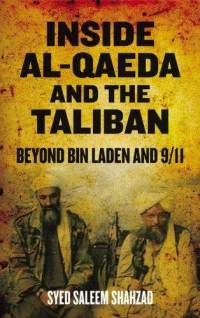
If you haven’t read Syed Saleem Shahzad’s book, Inside Al-Qaeda & the Taliban: Beyond Bin Laden & 9/11, then you don’t know the intricate details and nuances of the AQ network and their goals and missions, and real leadership!
Syed Saleem Shahzad was an independent journalist who knew too much. He was abducted and murdered in 2011, but his book was published regardless.
This is one of the most profound books on the topic. Shahzad’s understanding of the inside dynamics of AQ and the Taliban is unsurpassed.
Please read this excellent article by Sameer Khan, “Dara Shukoh and the Struggle for Liberal Islam”
http://www.jpost.com/Opinion/Op-EdContributors/Article.aspx?id=285570

Dara Shukoh
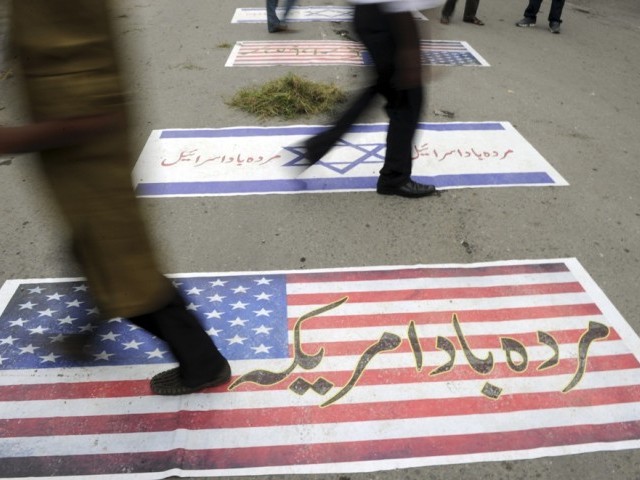
Writing on flags say: “Death to America” and “Death to Israel”
No one has learned anything from past lessons. The senseless violence snowballing throughout the Muslim world, supposedly in reaction to an amateurish 14-minute YouTube trailer for a film that no one can find in full length, is a stain on the 21st century. The news media are presenting the cause of the violence as solely stemming from the anti-Islamic film, entitled “Innocence of Muslims,” which ridicules the Prophet Muhammad. However, there is much more behind the causal factors of this epidemic violence than the simplistic headlines convey. Here are some variables, based on my assessment, pertaining to this outbreak of violence, and all of them are interrelated:
No doubt, many Muslims are expressing genuine hurt feelings and passionate emotions in reaction to insults and offenses targeting Muhammad, the last prophet of Islam, in the film trailer. If we look back at the Salman Rushdie affair in the 1980s, we see that such sensitivities have not changed, and on the part of more orthodox and conservative Muslims, they have only intensified. In addition, this film comes in a long series of anti-Islam expressions, like the Danish cartoons, the threat of Quran burning by Terry Jones, the accidental Qurans burned in Afghanistan, etc. These recent incidents have only reinforced the narrative among many Muslims that the West is against Islam and permits such offenses with impunity. That’s the perception fueling the anger and hatred. Yet, there is no condemnation of killings in response to these perceived offenses, like the murder of Theo Van Gogh, for example. Objective parity is not part of the narrative in this case.
Such hurt feelings and anger never justify the violence and vandalism that the recent protests have generated. In the big picture, so many films, TV shows, art exhibits, and popular culture programs and performances have insulted Christianity and other religions. Consider “The Simpsons,” “Family Guy,” “South Park,” and “Monty Python,” to name a few, which are film producers and programs that have repeatedly ridiculed Christianity and other faiths with the sharpest irreverence and mockery, yet we never see violent reactions to them.
Among Islam’s ultra-orthodox and extremist elements, resorting to violence and calling for the death of the offenders are all too quick to the draw. No one seems to pause and consider the consequences and damage to Islam’s image as a whole, as they become so consumed by their emotions and hatred. There have been calls for peaceful protests by some, but mob mentality is hard to control especially once it gets out of hand.
This brings me to extremists pulling strings behind the scenes and having a field day. Undoubtedly, extremist leaders at local levels see an opportunity in manipulating and exploiting the emotions and passions of the masses, especially those who embrace common extremist ideologies. It is no coincidence that the attacks on the US consulate in Libya and the US embassy in Egypt fell on September 11th, which reinforces the theory that there is more to this violent fervor than just emotive reactions to the offensive film, which most protesters have not even seen (and for the record, the trailer is not worth one’s precious time). Some analysts are also pointing to the revenge factor, especially in the case of the attack in Benghazi, Libya, that killed US Ambassador Chris Stevens and his security detail. In June Al Qaeda’s number two leader in Yemen was killed, and he happened to be Libyan.
Furthermore, the extremist Islamists are dismayed at being sidelined and even delegitimized upon the 2011 uprisings and revolutions that toppled decades-long secular dictatorships. For just as long, these extremist groups spread throughout the region, although small in numbers, were forced to operate underground. Once the revolutions took place last year through mostly nonviolent protests and civil disobedience, the extremists had the rug pulled from under them. Even the Islamist parties that have come to power following the revolutions in Tunisia and Egypt have to balance their respective Islamism with moderate secular and liberal ideals and policies. This also angers the extremists, who feel that these Islamist governments are “too soft” in their Islamism. Particularly in the case of Egypt and Sudan, Islamist hardliners are pressuring the governments to capitulate on some of their demands to implement stricter Shariah rules and policies. These Islamists constitute major political constituents in some cases, and so the governments cannot be seen as leaning too much toward secularism and liberalism.
Similarly, the protesters, especially the young men, continue to hold grievances against their own governments for failing to meet their needs, especially providing jobs and a better future for the next generation. Thus, woven into this discontent about the anti-Islam film are the underlying grievances against respective governments, especially for socioeconomic reasons. Change is not occurring fast enough for many, and this has been an opportunity to express their multi-layered anger.
Anti-Western and especially anti-American sentiments are also being exploited by various elements. Many people in the region, but certainly not all, see Western values, especially freedom of expression, as “boundary-less,” meaning that these freedoms and rights have no limits. This is not exactly true, because we have laws against “hate speech” and of course the exception to the First Amendment right to free speech and expression exists for the sake of public order and safety, prohibiting incitement of violence. The “shouting ‘fire’ in a crowded theater” phrase aptly describes this exception.
But, most people in the region are not aware of these provisions and exceptions. They simply see that an American national has funded and produced this vile film, and that the US government should take action against such offenses, and place boundaries or “reasonable limits” on free speech and expression. US Secretary of State Hillary Clinton and President Obama have unequivocally condemned this film, as well as the violence in the Muslim world. But, they have no authority to undo the constitutional laws that grant all Americans First Amendment rights and freedoms. The First Amendment embodies the fabric of American values, and, by the way, it also grants everyone the freedom of religion. We should never compromise on that.
The last few days have been extremely sad, tragic, and disheartening. Too many breaches have occurred, including the murder of Ambassador Stevens and his colleagues. Also, the loss of life of protesters is, in my opinion, such a waste.
According to a Reuters article (9/14/2012), entitled “Anti-American fury sweeps Middle East over Film” –
“At least seven people were killed as local police struggled to repel assaults after weekly Muslim prayers in Tunisia and Sudan, while there was new violence in Egypt and Yemen and across the Muslim world, driven by emotions ranging from piety to anger at Western power to frustrations with local leaders and poverty.”
The article also explains the balancing act that Egypt’s President Mursi must play regarding the Cairo protests and US relations (Egypt is the second highest recipient of US foreign aid):
“Mursi must tread a line between appealing to an electorate receptive to the appeal of more hardline Islamists and maintaining ties with Washington, which long funded the ousted military dictatorship.”
The Salafists are involved in most if not all of these violent protests. I have repeatedly written about the dangers of Salafists, even in Tunisia, as the Reuters article describes:
“Further west along the Mediterranean, a Reuters reporter saw police open fire to try to quell an assault in which protesters forced their way past police into the U.S. embassy in Tunis. Some smashed windows, others hurled petrol bombs and stones at police from inside the embassy and started fires. One threw a computer from a window, others looted computers and telephones.
A Tunisian security officer near the compound said the embassy had not been staffed on Friday, and calls to the embassy went unanswered. Two armed Americans in uniform stood on a roof.
The protesters, many of whom were followers of hardline Salafist Islamist leaders, also set fire to the nearby American School, which was closed at the time, and took away laptops. The protests began after Friday prayers and followed a rallying call on Facebook by Islamist activists and endorsed by militants.”
This is shameful, disgusting, and criminal behavior, not much different in measure than the film producer, and in fact is even worse because lives have been lost.
This behavior also exhibits extreme immaturity at so many levels. Islam is the youngest of the Judeo-Christian faiths, and its internal ideologies and diverse compositions and manifestations are still evolving. As one student put it, Christianity used to be very puritanical, with the Inquisition, the Crusades, witch-burnings, and the like. Islam is going through its phases and evolutions as well, some aspects of which are still very medieval in their outlook. It’s imperative for the world’s Muslims to reconcile the internal conflicts and facilitate enlightenment and stamp out the extremist ideologies that are so harmful. Puritanism serves no purpose, especially in the modern era. It is extremely counterproductive and threatens regional and global peace and security.
Another point for the Muslim world to ponder is this: given all the anti-Americanism and knee-jerk emotional and violent reactions that we’ve been witnessing throughout the Muslim world, Western powers will think twice before helping Muslims again, and that might include the opposition in Syria.
Finally, why people continue to take the bait is beyond comprehension. Clearly, this film was intended to provoke anger and emotions. Yet, it seems that repeatedly Muslims fail to transcend the temptations to react, especially so destructively. Consider that the Prophet Muhammad’s own reputation and character should speak for himself. Does he really need people to defend his name violently? Isn’t something wrong with this picture? It only gives perpetual license to the world’s provocateurs, who are probably rolling on the ground laughing, at the expense of global peace.
NOTE: Everything I write in this blog constitutes my personal opinions and views


Playwright and Director Sameer Khan is profiled in the Indian Express:
http://epaper.indianexpress.com/c/355839
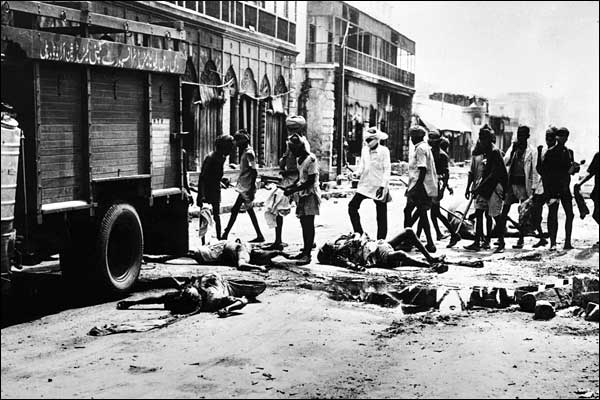
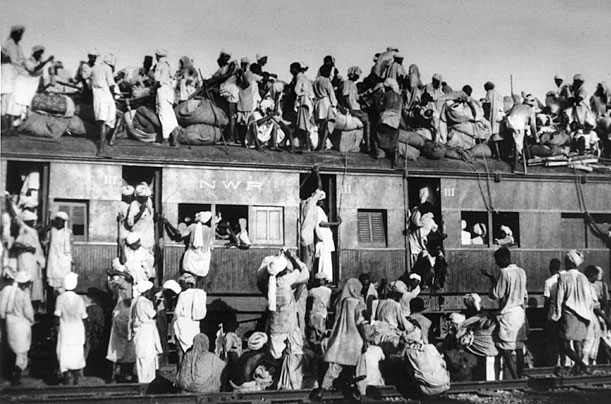
This play, titled “Imaan,” is a potent, poignant, and dramatic reminder about the devastating impact of Partition. If you’re in Pune, go see the play on Friday Sept. 7. Details provided in the URL link (Indian Express).


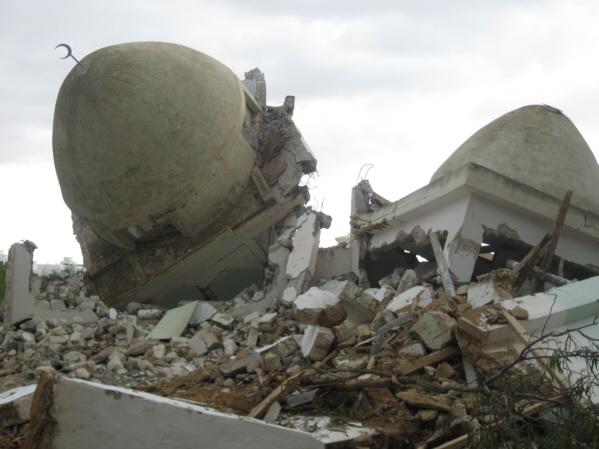
The last couple of weeks have been filled with bad news across the Middle East, South Asia, and even the Caucasus. The sheer destructiveness, outrageous, deplorable behavior, and intolerance manifested in the events are extremely disheartening, to say the least.
Russia’s President Vladimir Putin has a real challenge on his hands. Militants have attacked a number of moderate Muslim clerics in the Caucasus, and some have died. The clerics were known to be voices of moderation and criticism against the fanatical militants, who are proliferating in Russia’s southern edges. Reuters reports that in Dagestan, “more than a dozen young men from the village have ‘gone to the forest’ – the local euphemism for joining insurgents in their hideouts, says village administrator Aliaskhab Magomedov.” The reports indicate that these men are hardened Islamists as a result of working in the Gulf Arab states, returning home and spreading their Wahhabi ideology with violence.
Similarly, in two African countries we see Salafist and Al Qaeda-affiliated militants destroying Sufi mosques and shrines. In parts of Libya, they are literally bulldozing heritage sites, not unlike the Taliban’s destruction of the Bamiyan Buddha statues. In Mali, militants have literally chipped away at UNESCO heritage sites with hammers and chisels. These militants also want to target libraries and museums in order to destroy precious archeological icons and manuscripts that they deem “un-Islamic.” When you read Ahmed Rashid’s book on the Taliban, you learn that when the Taliban first came to power in the mid-1990s, and took over Kabul, one of the first institutions they attacked and destroyed were libraries. Nothing has changed, except the geography. Such mentalities still may be among minority fringe groups. Nonetheless, their propensity for violence and destruction is not only horrendous, but also, alarmingly, proliferating in other regions.
Such is the venom of Wahhabi/Salafi ideology, and let’s not forget that the seat of Wahhabism, Saudi Arabia, has long upheld policies for destroying sacred and heritage sites, and carried them out within the kingdom. The Saudis, after all, are one of the creators of the Taliban. That is very telling indeed. In fact, the “League of Libyan Ulema, a group of more than 200 Muslim scholars, on Tuesday evening blamed the attacks on a son of the late dictator Muammar Qaddafi, Saadi, and his Libyan Salafi allies it said were inspired by radical Saudi preachers. Sufi theologian Aref Ali Nayed said Libya had not seen such attacks for centuries. ‘Even Mussolini’s fascists did not treat our spiritual heritage with such contempt,’ he said” (Reuters). Italy under Mussolini occupied Libya until WWII.
While the West is preoccupied with vilifying Iran – and this is not to say that the Iranian regime is not a problem or a threat – we in the West are frighteningly myopic in terms of seeing the big picture: i.e., Salafism / Wahhabism is proving to be even more destructive, violent, intolerant, and hate-mongering on a daily basis than what we see coming from Iran, and not just in words, but also in action. The only thing is that the former is not on the radar, while the latter (Iran) is the object of obsession in the West. That scenario will only lead to repeating costly past mistakes: can we say “Mujahideen” in the Af-Pak region?
The Libyan Ulema and citizens are extremely frustrated with Tripoli’s seemingly inability to stop the Salafi assault on the country’s shrines, mosques, and heritage sites.
“The League of Libyan Ulema (Muslim scholars) urged Tripoli ‘to pressure the government of Saudi Arabia to restrain its clerics who meddle in our affairs’ by training young Libyans in Salafism and spreading the ideology through books and tapes.
It also urged Libyans to protect Sufi sites by force.
Nayed, who lectures at the old Uthman Pasha madrasa that was desecrated on Tuesday evening, said the attackers were ‘Wahhabi hooligans (and) all sorts of pseudo-Salafi elements’ while government security officials were ‘complacent and impotent.’
‘Libya has to make a clear choice – either a Taliban/Shabaab-style religious fanaticism or a true Muslim moral and spiritual civility,’ he told Reuters.”
The Salafists – or, as Nayed pointedly and correctly calls them “Wahhabi hooligans” – are an imminent threat to the stability and security of the regions and sub-regions in which they operate. And, that is exactly their intent, to destabilize, coerce, bully, and terrorize. Although their militant ideologies have been dealt a severe blow since the mostly peaceful 2011 Arab uprisings and revolutions successfully changed regimes in Tunisia, Egypt, and Libya, the Wahhabi hooligans also see the same events and outcomes as an opportunity to fill any gaps that may appear in the nation building processes in respective countries. Effective policies and law enforcement are needed to preclude them from gaining even an inch. Think of them as hyenas lurking in the darkness, only now they are audaciously operating in broad daylight.
The other major recent incident is the disgustingly shameful “blasphemy” case in Pakistan, which has landed a young 14-year-old girl with mental disabilities, who happens to be a Christian, in prison. Instead of protecting this child and her family, the Pakistani authorities, in all their hollow wisdom, have thrown her in jail, and might make her stand trial. Blasphemy prosecutions can render death sentences. This has stirred outrage worldwide, and especially among human rights organizations. Perhaps in reaction to the outrage, police arrested the local imam who some claim is the culprit in framing the child. But, this case is about more than just the tragic circumstances of this child, her family, and the Pakistani Christian community at large. This ludicrous behavior by the authorities and even the government, which initially called for “an investigation,” rather than calling for her immediate release, only highlights the moral bankruptcy of Pakistan. The expediency with which the so-called “blasphemy law” is used especially against religious minorities underscores the nakedly transparent bigotry that streams through Pakistan’s fabric. Furthermore, it is not only an example of moral bankruptcy, but it also illustrates the most profound absence of intelligence and reason. Regarding this case, there is no hole deep enough in the sand that would be sufficient for heads to bury themselves in, as far as I’m concerned. I close with a quote by George Orwell:
“One defeats a fanatic precisely by not being a fanatic oneself, but on the contrary, by using one’s intelligence.”
NOTE: Everything I write in this blog constitutes my personal opinions and views

Cell phones banned for girls and women under 40
Here is my latest opinion piece in the Jerusalem Post, “Taliban 2.0: Targeting Women Globally”:
http://www.jpost.com/Opinion/Op-EdContributors/Article.aspx?id=282679
I would be interested to know what readers think about such decrees (fatwas) being handed down to restrict the rights and freedoms of girls and women in India and elsewhere. Please don’t hesitate to submit your comments. Thanks.
Today (August 8, 2012) I was interviewed on BBC World Service, discussing cyber warfare in Syria. You can access the podcast at this URL: http://www.bbc.co.uk/podcasts/series/newshour
See the list of stories in the column on the right, and click on “Syria Cyber-war 8/8/2012”
The direct download link is here:
http://downloads.bbc.co.uk/podcasts/worldservice/newshour/newshour_20120808-2216b.mp3
My interview is 6 minutes 45 seconds into the program.
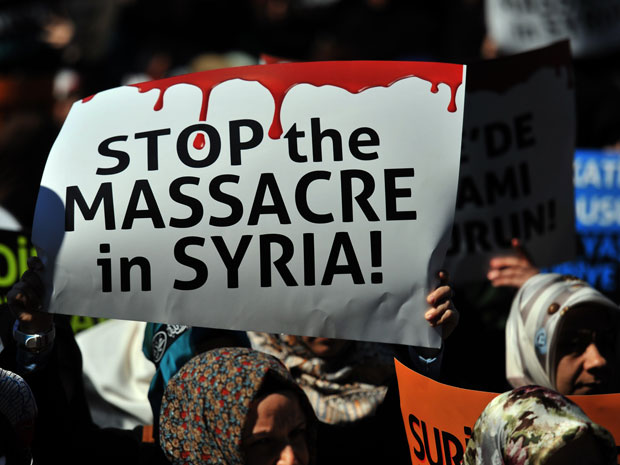
“’As we watched the efficient attack on Assad’s National Security council on Wednesday, Assad found himself one minister of defense and brother-in-law short. Interventions have been taking place in the 17 month old conflict since its inception, and the only issue now is for those who have picked their horse – in this case, the unpredictable, unknown creature called the Syrian opposition – to bide their time.
What we are watching now is the increasingly rapid entropy of the Assad regime and not without the considerable aid from several intelligence agencies which are many and varied – Jordanians, the Central Intelligence Agency, British, French and Turkish agents’.”
This is a quote from an online blog called “Above Top Secret,” which includes analysis from Stratfor Intelligence (a private open-source intelligence firm). I was also recently quoted for a Reuters piece on Syria speculating the same thing: that the sophisticated bombing successfully taking out key senior officials in Assad’s inner circle could not have happened without outside help, as well as an insider turncoat. It was indeed a spectacular attack that has shaken but not collapsed the regime.
The alleged outside support, which I am coining “Neo-Interventionism,” is not new or unique to the Middle East, especially in terms of supposed covert assistance being given to Syrian rebels. However, this neo-interventionism is unique in the sense that the outside supporters of the opposition see Syria as a means to undermine the Iranians. And, as much as some are profusely denying that a sectarian component exists in this scenario, it is clear as day that the backing of the opposition by conservative Sunni / Wahhabi Saudi Arabia, and Qatar, is imbued with the Sunni-Shiite rivalry and geopolitical, regional, and ideological competition. No one would be happier to poke the Iranian regime in the eye, and pull the rug out from underneath them, more than the Saudis and their allies, which includes Western powers.
Yet, many scholars, analysts, media, and regional and Western powers are conveniently turning a blind eye to this and a few other uncomfortable truths. Among these is the fact that the Saudis and Qataris are not involving themselves out of the goodness of their hearts. They see a golden opportunity here, but with gross disregard to the regional risks and perils that such neo-interventionism harbors. Part of my neo-interventionist theory is that old lessons from history are never learned, and the parties involved are bound to repeat history, like the civil war in Syria that is very similar to the civil war in Lebanon (or will ultimately morph into such). The only difference is that now there are some new actors involved in new contexts. The configurations and in some cases even the grudges remain unchanged.
Another uncomfortable truth is that atrocities and crimes are being committed by both the Asad regime and the opposition rebels. Robert Fisk of the Independent reports at least 200 women outside of Homs have been raped by both sides, and the actual numbers of victims could be much higher throughout Syria. Extrajudicial killings and kidnappings are also taking place.
Yet another uncomfortable truth is that no one actually knows the composition of the rebels, and that among them are some unsavory characters, including hard-line Salafists, criminals, and drug addicts.
Quoting Robert Fisk again in his piece dated July 22, entitled “Sectarianism Bites into Syria’s Rebels,” he cites a young man who works for the Syrian opposition, upon his arrival to an office in Beirut. He bears a message for the opposition in Beirut just before the Damascus operation:
“His story was as revealing as it was frightening. Damascus was about to be attacked. But the fighters were out of control. There were drug addicts among them. ‘Some of our people are on drugs,’ the visitor said. ‘They will take anyone out. We can’t guarantee what some of these men will do. If they went into Malki [a mixed, middle-class area of central Damascus], we couldn’t protect any of the people who live there. We are against the Salafists who are fighting – there are good Syrians, Druze and Ishmaeilis [Alawites] who are with us. But if we capture Damascus, we don’t know how to run a small town, let alone a country’.”
If there is a lesson to learn from it’s the case of Libya, which is still a mess and where violence and kidnappings continue to plague society. But, Libya is nothing compared to Syria, especially with the potential for spillover of the civil war into Lebanon. If we think the case of Libya is turning into a transitional nightmare, then we must brace ourselves further for Syria’s civil war, as well as for the uncertainties pertaining to the post-Asad era. There is much speculation about what a post-Asad Syria would look like, but another uncomfortable truth is that the likelihood for power struggles, sectarian cleansing, ideological spats, and chaotic violence is very high.
There is no doubt that the Syrian civilians are suffering, including refugees fleeing to neighboring countries. They deserve security and protection, and a long-term solution for the future health of their country. In my opinion, the Asad regime and the rebels are disregarding the plight of the civilians caught in the middle of the conflict zones. And, the rest of the world is impotent, except for the neo-interventionism, which is myopically pursuing respective national interests, rather than genuinely concerned about the innocent non-combatants.
Says Robert Fisk:
“Now, of course, Saudi Arabia and Qatar, where al-Jazeera is based, make no secret of the funds and weapons they are running into Turkey and Lebanon for the resistance – without apparently caring very much who the ‘resisters’ are. The Lebanese army managed to stop one out of five shiploads of guns, but the others, carried on Sierra Leone-registered vessels, were able to unload.”
If either side – whether the Asad regime, the opposition groups, Free Syrian Army / rebels, and the foreign supporters – really cared about the Syrian civilian population, they all would stop what they are doing right now, lay down their arms, and sit at the negotiating table. Obviously, they each have their own agendas for Syria and possibly the region, and their actions show that the civilians are pawns and dispensable entities. Syria can end up becoming the Middle East’s Afghanistan.
Fisk’s last paragraph says:
“One of the two organizations that claimed responsibility for last week’s Damascus bombing, Liwa Islam – the Islam Brigade – raises again the Salafist element in Syria’s armed opposition. One newly arrived refugee from Syria told me last week that they have forbidden alcohol and openly say they intend to die fighting in Damascus. Given the savage response of the Syrian regime, they may get their last wish.”
It doesn’t seem to matter to them who gets in the way.
NOTE: Everything I write in this blog constitutes my personal opinions and views
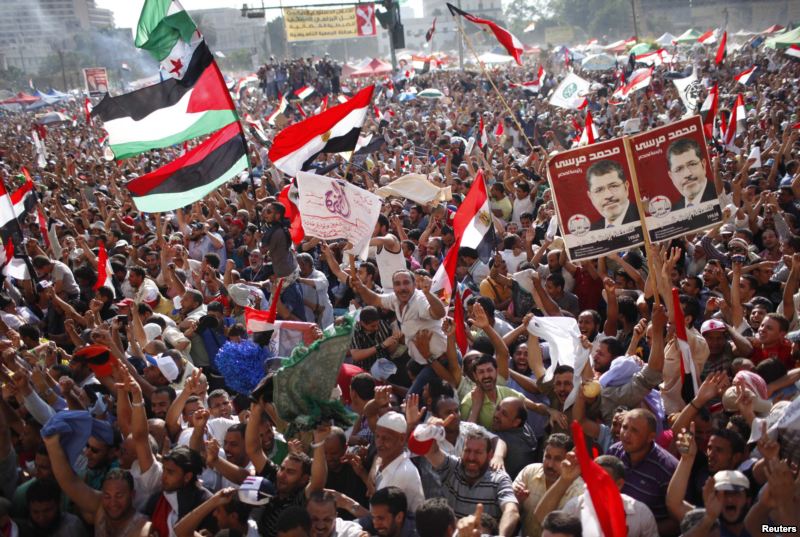
I never thought I’d see it in my lifetime. I lived in Egypt for four years, under Mubarak, and I never would have guessed that within a few years he would be overthrown, and the arch nemesis of the regime, the Muslim Brotherhood (MB), would win an election. Yet, it has happened, and after a very long, drawn out, meticulous reading of the election results on Sunday afternoon, which I presume has served as a torture tactic in Egyptian prisons, finally the commission announced MB candidate Mohamed Morsi as the winner of the run-off, beating the former Mubarak PM Ahmed Shafiq. Of course, the real hard work begins now, in dealing with old and new political institutions, the religious establishment, and the demands of the revolutionaries. Plus, external powers will have to be reassured of the preservation of their regional interests. The status quo persistently lurks in the shadows.
In my opinion, neither Shafiq nor Morsi were good candidates for a progressive future. The former represents the Mubarak regime, and the latter’s religious platform generates apprehension especially among many women, religious minorities (i.e., the Coptic Christians), the revolutionary youth movement, and secularists and moderates. Morsi inherits an unenviable task and circumstance, although anyone in his shoes would have faced similar daunting challenges.
Some of the pressing priorities and challenges awaiting him are worth reviewing:
Economic challenges:
This is by far the number one priority and challenge that Morsi faces. Tourism has been hit hard since the 2011 revolution, and businesses and industries have suffered losses. Labor disputes have erupted, and in fact a labor dispute is what started the whole revolutionary movement (April 6th youth movement). Getting the economic engine going and in fact getting it to surpass previous growth levels will be analogous to climbing Everest ten times. But, that is what’s needed. Going back to pre-revolution economic status will not be sufficient. For this to occur, the Egyptian economy will have to open up and diversify significantly, plus simultaneous advances in education and training (including technological training) must be implemented. Given the meager literacy rates in Egypt (males 77%; females 62%), that alone will be a formidable challenge.
Political challenges:
There is already talk about SCAF setting a trap for Morsi, especially given that the constitution has yet to be written. The political challenges are immense, and the uncertainties regarding SCAF’s agendas are great cause for concern. Morsi will have to tread with extraordinary political savvy, and his lack of previous political experience already renders him politically handicapped. He will need the most politically shrewd and skilled circle of advisers around him. How likely that is remains to be seen.
Ideological challenges:
Internal ideological challenges within the MB, but also involving the religious establishment, will create factionalism and could engender indecision and/or poor social policies. If Morsi gives in to pressures for instituting strict Islamist policies, many aspects of socioeconomic development and human rights can be seriously derailed and undermined. Another ideological challenge is the impact of regional developments, mainly what’s happening in Syria, which in reality symbolizes the Sunni-Shi’ite rivalry (i.e., Asad’s alliance with Iran and Hezbollah). Although Morsi has already expressed improving relations with Iran, the Syrian conflict, along with a possible US-Israeli military strike against Iran’s nuclear facilities, could escalate the sectarian tensions in the region. In that scenario, Egypt will be compelled to side with the status quo.
Regional challenges:
Israel is the number one regional relations issue for Egypt, and Morsi’s position regarding the Camp David Accords will be greatly scrutinized especially by Western powers. In addition, instability in Libya next door may have an impact on political and security issues in Egypt, not to mention the problems in Sudan. Floods of refugees into Egypt have long caused pressures on the local economy, and with continuing conflicts in these neighboring states, it could worsen. Morsi says he wants to improve relations with Iran. Given Iran’s support for the Asad regime in Syria, this might not prove a popular stance domestically, but it is still a step in the right direction, since Egyptian-Iranian relations have remained strained for years. Who knows, at some point maybe Egypt could play a significant role in diplomacy involving Iran and her adversaries in the region and also in the West. If Egypt can rise once again as a major regional player, then that will truly be a huge feather in Morsi’s cap.
External foreign relations challenges:
Egypt’s relations with the US and other Western powers will be critical for her socioeconomic development. The caveat in this is the gauntlet laid down by SCAF, much of which remains unknown, in terms of treading that path smoothly in the transition process. So far, the US has congratulated Morsi upon his win. But, that does not mean that he will not be viewed with skeptical eyes and heavy scrutiny. Moreover, he risks undermining his own credibility if he starts to wave the Islamist flag a bit too fervently. Morsi and his government will have to maintain a delicate balance between Islamism and democracy, and along those lines, the “Turkish model” of the AKP has been repeatedly cited. Morsi and company will remain under the microscope for a long time.
Morsi will face many pressures and temptations to invoke and perhaps implement stricter Islamic rules and policies in post-Mubarak Egypt. If he leans more towards such matters and issues, then it will be an indication of his lack of focus on the real priorities of the country, those that pertain to socioeconomic development and progress, alleviating poverty and illiteracy, and improving the quality of life for the masses.
If other Islamist parties/organizations are any indication of the direction that they are inclined to take, for example Hamas and Hezbollah, then there is every reason to be skeptical about the MB in Egypt. Islamist groups in the region have failed miserably to illustrate a keen capability to govern effectively and uphold fundamental human rights. In the end, the successes of Islamist parties may render the region a bastion of Islamism, but with nothing substantive to show for it. Let’s see if they can prove the skeptics wrong.
NOTE: Everything I write in this blog constitutes my personal opinions and views
 Hayat Alvi, Ph.D.