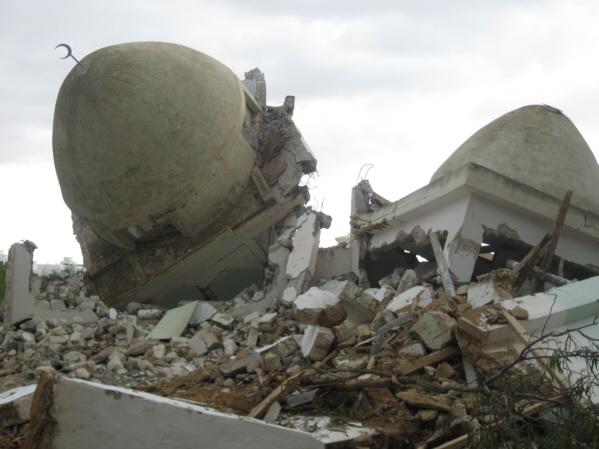
Salafist / Wahhabi Hooligans’ Agendas for Destruction and Violence

2 09 2012

The last couple of weeks have been filled with bad news across the Middle East, South Asia, and even the Caucasus.  The sheer destructiveness, outrageous, deplorable behavior, and intolerance manifested in the events are extremely disheartening, to say the least.

Russia’s President Vladimir Putin has a real challenge on his hands.  Militants have attacked a number of moderate Muslim clerics in the Caucasus, and some have died.  The clerics were known to be voices of moderation and criticism against the fanatical militants, who are proliferating in Russia’s southern edges.  Reuters reports that in Dagestan, “more than a dozen young men from the village have ‘gone to the forest’ – the local euphemism for joining insurgents in their hideouts, says village administrator Aliaskhab Magomedov.”  The reports indicate that these men are hardened Islamists as a result of working in the Gulf Arab states, returning home and spreading their Wahhabi ideology with violence.

Similarly, in two African countries we see Salafist and Al Qaeda-affiliated militants destroying Sufi mosques and shrines.  In parts of Libya, they are literally bulldozing heritage sites, not unlike the Taliban’s destruction of the Bamiyan Buddha statues.  In Mali, militants have literally chipped away at UNESCO heritage sites with hammers and chisels.  These militants also want to target libraries and museums in order to destroy precious archeological icons and manuscripts that they deem “un-Islamic.”  When you read Ahmed Rashid’s book on the Taliban, you learn that when the Taliban first came to power in the mid-1990s, and took over Kabul, one of the first institutions they attacked and destroyed were libraries.  Nothing has changed, except the geography.  Such mentalities still may be among minority fringe groups.  Nonetheless, their propensity for violence and destruction is not only horrendous, but also, alarmingly, proliferating in other regions.

Such is the venom of Wahhabi/Salafi ideology, and let’s not forget that the seat of Wahhabism, Saudi Arabia, has long upheld policies for destroying sacred and heritage sites, and carried them out within the kingdom.  The Saudis, after all, are one of the creators of the Taliban.  That is very telling indeed.  In fact, the “League of Libyan Ulema, a group of more than 200 Muslim scholars, on Tuesday evening blamed the attacks on a son of the late dictator Muammar Qaddafi, Saadi, and his Libyan Salafi allies it said were inspired by radical Saudi preachers.  Sufi theologian Aref Ali Nayed said Libya had not seen such attacks for centuries.  ‘Even Mussolini’s fascists did not treat our spiritual heritage with such contempt,’ he said” (Reuters).  Italy under Mussolini occupied Libya until WWII.

While the West is preoccupied with vilifying Iran – and this is not to say that the Iranian regime is not a problem or a threat – we in the West are frighteningly myopic in terms of seeing the big picture:  i.e., Salafism / Wahhabism is proving to be even more destructive, violent, intolerant, and hate-mongering on a daily basis than what we see coming from Iran, and not just in words, but also in action.  The only thing is that the former is not on the radar, while the latter (Iran) is the object of obsession in the West.  That scenario will only lead to repeating costly past mistakes:  can we say “Mujahideen” in the Af-Pak region?

The Libyan Ulema and citizens are extremely frustrated with Tripoli’s seemingly inability to stop the Salafi assault on the country’s shrines, mosques, and heritage sites.

“The League of Libyan Ulema (Muslim scholars) urged Tripoli ‘to pressure the government of Saudi Arabia to restrain its clerics who meddle in our affairs’ by training young Libyans in Salafism and spreading the ideology through books and tapes.

It also urged Libyans to protect Sufi sites by force.

Nayed, who lectures at the old Uthman Pasha madrasa that was desecrated on Tuesday evening, said the attackers were ‘Wahhabi hooligans (and) all sorts of pseudo-Salafi elements’ while government security officials were ‘complacent and impotent.’

‘Libya has to make a clear choice – either a Taliban/Shabaab-style religious fanaticism or a true Muslim moral and spiritual civility,’ he told Reuters.”

The Salafists – or, as Nayed pointedly and correctly calls them “Wahhabi hooligans” – are an imminent threat to the stability and security of the regions and sub-regions in which they operate.  And, that is exactly their intent, to destabilize, coerce, bully, and terrorize.  Although their militant ideologies have been dealt a severe blow since the mostly peaceful 2011 Arab uprisings and revolutions successfully changed regimes in Tunisia, Egypt, and Libya, the Wahhabi hooligans also see the same events and outcomes as an opportunity to fill any gaps that may appear in the nation building processes in respective countries.  Effective policies and law enforcement are needed to preclude them from gaining even an inch.  Think of them as hyenas lurking in the darkness, only now they are audaciously operating in broad daylight.

The other major recent incident is the disgustingly shameful “blasphemy” case in Pakistan, which has landed a young 14-year-old girl with mental disabilities, who happens to be a Christian, in prison.  Instead of protecting this child and her family, the Pakistani authorities, in all their hollow wisdom, have thrown her in jail, and might make her stand trial.  Blasphemy prosecutions can render death sentences.  This has stirred outrage worldwide, and especially among human rights organizations.  Perhaps in reaction to the outrage, police arrested the local imam who some claim is the culprit in framing the child.  But, this case is about more than just the tragic circumstances of this child, her family, and the Pakistani Christian community at large.  This ludicrous behavior by the authorities and even the government, which initially called for “an investigation,” rather than calling for her immediate release, only highlights the moral bankruptcy of Pakistan.  The expediency with which the so-called “blasphemy law” is used especially against religious minorities underscores the nakedly transparent bigotry that streams through Pakistan’s fabric.  Furthermore, it is not only an example of moral bankruptcy, but it also illustrates the most profound absence of intelligence and reason.  Regarding this case, there is no hole deep enough in the sand that would be sufficient for heads to bury themselves in, as far as I’m concerned.  I close with a quote by George Orwell:

“One defeats a fanatic precisely by not being a fanatic oneself, but on the contrary, by using one’s intelligence.”

NOTE:  Everything I write in this blog constitutes my personal opinions and views


Taliban 2.0: Targeting Women Globally – Jerusalem Post Aug 27 2012

26 08 2012

Cell phones banned for girls and women under 40

Here is my latest opinion piece in the Jerusalem Post, “Taliban 2.0: Targeting Women Globally”:

http://www.jpost.com/Opinion/Op-EdContributors/Article.aspx?id=282679

I would be interested to know what readers think about such decrees (fatwas) being handed down to restrict the rights and freedoms of girls and women in India and elsewhere.  Please don’t hesitate to submit your comments.  Thanks.


The Saudi Specter in Syria and the World

10 02 2012

My recent post about Syria, the Russian bear, and Iran passionately describes the plight of innocent civilians being killed in Syria.  While my supportive sentiments for the human rights of Syrians remain steadfast, there are some developments and stories within the stories that are not reaching the mainstream press, and are alarming signs that Syria may be spiraling into another Lebanon (i.e., the civil war in Lebanon, 1975-1990).

One of these signs is the sectarian strife, where reports about Sunnis and Alawites targeting each other, as well as kidnapping for ransom and release of detainees, are surfacing.  Of course, the Assad regime itself has most likely intensified such sectarianism, but nonetheless, the fierce sectarian violence witnessed in the Lebanese civil war is a potential scenario in today’s Syria.  I have already seen at least one anti-Shiite posting on Facebook in reference to Syria.

This brings me to the other specter pertaining to Syria:  the Saudis, with their Wahhabi and very anti-Shiite (read “anti-Iran”) agenda for the region.  No one should be surprised with Saudi propositions for the need to end the slaughter in Syria.  But, we should read between the lines very carefully, considering the source.  Al Arabiya quotes Saudi King Abdullah as calling for “‘critical measures’ to be taken on Syria, warning of an impending ‘humanitarian disaster’.”

Uh-huh.  This is the same Saudi monarch who sent tanks and troops into Bahrain and viciously cracked down on and killed and abused countless civilians to quell the uprising there.  But you see, the Bahraini protesters were mostly Shiites, and once the dust settled in Pearl Square, Shiite shrines were systematically bulldozed.  Starting to see the picture folks?

In my book, the Saudi “government” is never sincere about humanitarian issues.  Look at their own track record inside the kingdom; it’s the epitome of intolerance.  The Saudis are one of the creators of the Taliban, and the supporters and exporters of the most intolerant, ultra-orthodox / literalist, violent, misogynist, and militancy-inspiring ideology in the world, that is, Wahhabism.

If you have any doubts about the Saudis’ human rights track record, go to the Human Rights Watch website and read the country report on Saudi Arabia (http://www.hrw.org/middle-eastn-africa/saudi-arabia).  And, here is another example of Saudi intolerance, reported in David Keyes’ article in the Washington Post (Feb. 9):

“Saudi journalist Hamza Kashgari was detained in Malaysia on Wednesday night and is likely to be extradited soon to Saudi Arabia, where he will be tried for blaspheming religion. Kashgari, 23, had fled the kingdom Monday after he received thousands of death threats. His crime? He posted on Twitter a series of mock conversations between himself and the Islamic prophet Muhammad.

‘On your birthday I find you in front of me wherever I go,’ he wrote in one tweet. ‘I love many things about you and hate others, and there are many things about you I don’t understand.’

Another reads: ‘No Saudi women will go to hell, because it’s impossible to go there twice.’

The tweets came to light last week around a celebration of Muhammad’s birthday, and Kashgari’s ordeal began. Hours before he was detained, Kashgari spoke to me by phone from the house in which he was hiding. ‘I was with sitting with my friends and one of them checked Twitter on his mobile phone,’ he said. ‘Suddenly there were thousands of tweets of people calling to kill me because they said I’m against religion.’

… Kashgari noted with sadness that many young Saudis are leaving their country in hopes of escaping the government’s repressive policies. ‘It’s not logical that, if someone disagrees with the Saudi government, that he should be forced to leave the country. Many of those who have been arrested are fighting for simple rights that everyone should have — freedom of thought, expression, speech and religion.’

The young writer surmised that the threats against him were, in part, a result of the tens of millions of dollars the Saudi king allotted to the religious police last spring. Many Saudi dissidents have noted increased repression in the past few months and are terrified of the ascent of Crown Prince Naif, who has served as interior minister for decades.”

Reports are indicating that Saudi King Abdullah has personally demanded Kashgari’s arrest.  If Kashgari is extradited, he faces the possibility of execution for blasphemy.  This is coming from a strong US ally.

All of this does not in any way exonerate the crimes of the Assad regime.  But, we must remain vigilant about scrutinizing sources of information and news, and read between the lines when heads of state in the region so vociferously call for action to help the Syrian civilians.  Clearly, they have their own agendas, and that couldn’t be more the case when it comes to the Saudi king.  Hypocrisy, intolerance, and systematic anti-Shiite agendas constitute the Saudi specter concerning Syria.

NOTE:  Everything I write in this blog constitutes my personal opinions and views.


Understanding Afghanistan

8 01 2012

There’s a circle of journalists and scholars who has been following and writing about Afghanistan since the Soviet invasion days.  One of them is Edward Girardet, whose current book, Killing the Cranes:  A Reporter’s Journey through Three Decades of War in Afghanistan, offers personal accounts and commentaries about his encounters with Ahmed Shah Massoud, Gulbuddin Hekmetyar, and even Osama bin Laden.  Ed was a co-panelist with me at a 9/11 tenth anniversary talk we participated in at the University of Maine School of Law last year.  His talk was absolutely captivating, and I have a hard time putting down his book.

I like to consider myself as part of this circle, as I have also closely followed Afghanistan since the Soviet invasion.  Since 9/11 and the US campaign that toppled the Taliban regime, the US and ISAF (International Security Assistance Force) have come face-to-face with the complexities of the region.  If only the book Charlie Wilson’s War (2004) had been published sooner!  But, still, I doubt zealous policy makers on all sides would really appreciate or comprehend the complicatedness of the situation in Afghanistan, since diverse factors of the equations pertaining to each and every aspect of the situational factors are rarely considered, not to mention the often imprecise metrics in measuring the effectiveness of policies and strategies help put a more positive spin on the efforts and achievements of the coalition forces.  This is not to say that there are absolutely no positive results at all, but in light of a 2014 drawdown, this political analyst cannot help but be cynical.

For instance, much of Afghanistan’s economy relies on drug production and trafficking, as well as an intricate network of organized criminal activities involving warlords, gangsters, and a variety of opportunists, black marketers, and middlemen.  Check out this November 3, 2010 Time Magazine article (excerpts) describing only one aspect of Afghanistan’s black market economy:

“Popularly known as the ‘Bush Market’ and, increasingly, the ‘Obama Market’ the warren of small shops is the largest of several commercial centers named after U.S. Presidents that have sprung up since the fall of the Taliban in 2001. Indeed, the presence of foreign armies in the country has for many years spawned a supply and demand for their homegrown products. Three decades ago, during the Soviet occupation, its forerunner was called the ‘Brezhnev Market’ after the former head of the Communist Party, and its stalls were packed with basic Russian commodities. Now, 10 years into an American-led war, hard-to-find Western items are the top draw. ‘I come here all the time for new clothes,’ says Ajmal, 27, as he browses a selection of North Face trekking shoes. ‘The styles are good, the prices are low. It’s great’ …


At the Bagram market, bulletproof vests and Kevlar helmets are known to turn up. U.S. Army and Marine digital-camouflage fatigues are widely available for about $40 a set. And at another market near the capital’s largest mosque, Afghan police, army and even presidential guard uniforms sell for even less. (It’s not unheard of for Taliban suicide bombers disguised as Afghan security forces to infiltrate and attack large gatherings.) Yet shopkeeper Khwaja Muhammad, 23, concedes that although many of the customers are state military employees who go to buy a second uniform or have alterations done, ‘We sell to anybody with cash’.”


This is just one small glimpse into a spider-web network of the underground economy in Afghanistan, often linked to counterparts in Pakistan.  Ed’s book drives home the point:  if only we paid attention to certain caveats.

I contend that in order for a viable, legitimate economy to flourish, Afghanistan needs to empower an independent and impartial judiciary, which would presumably prosecute the lawbreakers, including those in the organized crime networks.  Some people argue with me that a viable Afghan judiciary is simply not possible, and even that it’s not the answer to Afghanistan’s problems.  It might not be the answer, but it better be part of the equation.

NOTE:  Everything I write in this blog constitutes my personal opinions and views.


Legitimizing the Taliban

3 01 2012

“American officials have said in recent months that the opening of a Taliban mission would be the single biggest step forward for peace efforts that have been plagued by false starts.”  This is a quote in today’s New York Times in an article entitled, “Taliban to Open Qatar Office in Step to Formal Talks.”  Pundits are viewing this as a prime opportunity and venue to hold “peace talks” with the Afghan Taliban.  However, I see something different:  (1) the post-9/11 war effort that toppled the Taliban from power, ten years later, only seems to revert back to negotiations with the very same enemy to share power after the US / ISAF pull-out in 2014; and (2) this “mission” is a means for backdoor legitimacy for the Taliban (although we know that they are not one monolithic entity – the top echelons under Mullah Omar will likely benefit most).

This is a very dangerous precedent, because it symbolizes what I call the calcification of the mind.  The Taliban are the enemies of knowledge.  Their empowerment, or return to empowerment, even if it’s limited, does not bode well for the future of Afghanistan, which, in my view, will fall back to square one.  No doubt, some Taliban are already congratulating themselves for their “victory” in gaining even an ounce of legitimacy, just by virtue of being recognized as an entity with which presumably peace talks can happen.  Once again, no one is thinking about the ideological and developmental disaster this portends for the Af-Pak region.

Consider this:  In Quil Lawrence’s NPR report (September 8, 2011), he interviewed a member of the Afghan Parliament who was also in the Northern Alliance, now a school principal.  Here is what Jaleb Mubin Zarifi, an ethnic Tajik, said in the interview:  “Democracy is un-Islamic,” and he praised the laws of the Taliban, saying, “The laws that they [Taliban] implemented – a good example, for instance, is about women – they asked all women to wear hijab (headscarf), and that’s a good thing.  And we know now that the women are not wearing hijab, and look what’s happening:  there’s cancer and AIDS everywhere now in Afghanistan.”  This was a Northern Alliance guy, not even Taliban.  Add the Taliban into the mix, and brace for the 21st century Inquisition.  Militant ideologies will have a field day.

This is not to say that a viable resolution should not be pursued in Afghanistan.  However, this rush to bring the Taliban to the negotiating table, and even opening a mission office for them in Qatar smacks of desperation to plug all the holes before pulling out of Afghanistan, out of fear that President Karzai’s house of cards might collapse, perhaps from the force of Taliban laughter in the wind.

NOTE:  Everything I write in this blog constitutes my personal opinions and views.


Gateway to 2012

31 12 2011

NOTE:  Everything I write in this blog constitutes my personal opinions and views.

As we enter 2012, I will dare to make some predictions about the Middle East, South Asia, and US foreign policy. This is dangerous, of course, because those of us who are Middle East scholars and political scientists know very well that making predictions is risky business.  But, I will take the opportunity of New Year’s Eve, reflecting on the amazing, tumultuous, and unimaginable events of 2011, and analyze the possible directions they will take in 2012.

The epicenter in 2012 will be Syria and Iran, although the post-uprising dust will still be settling in Tunisia, Libya, and Egypt, and as Robert Fisk has predicted, will continue to do so for years to come.

Yemen might descend into civil war, as if it isn’t already showing signs.

Pakistan’s internal crises will continue to metamorphose into various forms, one often triggering another.  Although the military contends that it will not carry out a coup, anything can happen.  Anything is possible.  US-Pakistan relations will continue to be frayed, while some attempts for reconciliation will continue.  Negotiations over resuming US foreign aid to the Pakistani military will be priority #1 for Pakistan.  That will offer some leverage to the US to extract some concessions from Pakistan.

Afghanistan will be status quo for the most part, although backdoor negotiations with the Taliban will continue.  And, while that happens, ironically, the Taliban and other militant groups will continue their attacks in Afghanistan and Pakistan.

The critical events in 2012 will involve Iran and Syria.  US and other Western powers’ and GCC states’ foreign policies relative to Syria are a means to sever and undermine Syrian-Iranian ties, which are very strong (i.e., between the Assad regime and Iran’s regime).  So, in reality, the stance against the Assad regime has more to do with Iran than really taking a stand against the Syrian regime, as seen with the extremely pathetic Arab League “observer” delegation’s government-controlled sweep of Syria.

Syria is likely to descend into a brutal, bloody civil war (and I really hope I am wrong about this, but that’s what the facts on the ground indicate).  This will potentially destabilize Lebanon, and could suck Iraq, Turkey, and Jordan directly or indirectly into the conflict.  It can even drag Israel into the battle.  This whole scenario would be a disaster for the region, setting it back even more decades than it already is lagging behind.  In the fog of this scenario, there will be attempts to undermine Iran, as well as to destroy or disrupt progress in Iran’s nuclear program.  This is all speculation, but as an analyst / expert of the region, it is informed speculation nonetheless.

So, as we enter through the gates of 2012, there is reason to shudder when considering the Middle East, and what’s happening in Syria.  Clearly, Assad will not go quietly, and it will come at the expense of terrible bloodshed.

On the plus side, despite all the difficulties and struggles that the protesters in Libya, Tunisia, and Egypt continue to endure, at least the snake’s head has been removed there.  Now, and in the years ahead, the task of getting rid of the snake’s body is before them.  They are up to the task.  Never lose hope.