The Conniving Judicial-Military Bedfellows in Egypt

3 06 2012

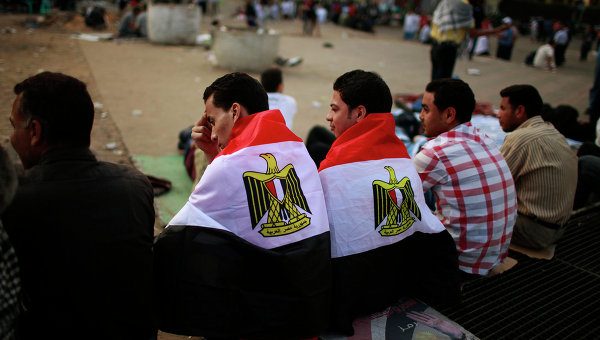
Ahmed Shafiq, the former Mubarak regime’s Prime Minister and one of the current presidential candidates, declared that “no one is above the law,” in reference to the recent verdict sentencing Hosni Mubarak to life in prison, and acquitting his two sons Gamal and Alaa and a number of senior officials and police officers responsible for killing numerous protestors.

Either Shafiq is delusional, or he is vying for an Oscar, all the while symbolically showing the revolutionaries his middle finger.  Well, the middle finger is representative of what the un-autonomous judiciary and current military regime (SCAF) in Egypt are engaging in with each other, for mutual benefits and advantages, in the combined effort to undermine the revolutionaries and the Muslim Brotherhood (MB), as the presidential election approaches in a couple of weeks.

In a press conference, Ahmed Shafiq said this about the MB (Al Jazeera Egypt Live Blog):

“Shafiq also attacked the Muslim Brotherhood’s candidate Muhammad al-Morsi, saying that his party represented ‘backwardness.’

‘I represent all Egypt, they represent an isolated category.  I am national reconciliation, the Brotherhood is revenge. I represent tolerance, the Brotherhood is isolation and discrimination.  My history is known, theirs is dark,’ he said.”

As if that will win the hearts and minds of Egyptians!

The rumor on the street is that Shafiq and SCAF plan to shoe him in somehow as the presidential election winner, after which he will acquit Mubarak and establish rules and policies that will continue the regime’s status quo ante.  The rumors might not be too far off the reality.  Egyptians know their politicians and political games well, warts and all.  As Mona Eltahawy put it in a recent CNN interview:  “The people are not stupid.”

These developments are a travesty of justice.  Many are rightly pointing out, what else should we expect?  The judiciary consists of the same characters and judges that worked for the Mubarak regime, and there is no light between them and SCAF.  Why should we expect any impartiality and judicial ethics?  Someone correctly tweeted, this is not a trial at all, it’s “black comedy.”  The Washington Post quotes a Tahrir Square protester:  “All of this is a charade, and we don’t accept it,” said Amal Ramsis, 40, as she protested in the square.

The same article by Leila Fadel states the following:

“Dissatisfaction with the ruling could push revolutionaries who had planned to boycott the runoff election for president into grudging support of Morsi, an uncharismatic conservative Islamist, experts said.

‘The Brotherhood might be able to capitalize on this to push the line for revolutionary unity against the regime,’ said Michael Wahid Hanna, an Egypt analyst at the Century Foundation. ‘The anger could push those planning to sit it out to cast a vote for the Brotherhood against the old regime’.”

In the case of Egypt, I’m afraid the cart was placed before the horse, although given the SCAF’s control over everything, I understand how difficult it has been for the revolutionaries to chip away at that rock-solid boulder of the former regime.  Ideally, the constitution should have been revised first, the judiciary purged completely and personnel and judges replaced with more reputable and credible people, and then the presidential elections should be held.  However, the complexities of the situation are understandably formidable.

Clearly, SCAF and company have not heeded the lessons of Tunisia and Libya.  The public is not demanding cosmetic changes, as regimes have done in the past, but complete overhauls of their dictatorships and institutions.  It’s unfathomable that, given all the events of 2011, SCAF still does not get it.  Instead, they continue to play underhanded tricks to remain in power and perpetuate their influence over institutions and the elections.  Sad to say this, but they are proving to be as blind and zealously power-hungry as Syria’s Bashar al-Assad.

Perhaps they should be reminded of some of these great quotes from Martin Luther King, Jr.:

“A lie cannot live.”

“A right delayed is a right denied.”

“In the absence of justice, what is sovereignty but organized robbery?”

“The first duty of society is justice.”

And certainly the revolutionaries do not need reminders about their resolve, but nonetheless, I leave you with this MLK quote, which is very inspiring:

“Change does not roll in on the wheels of inevitability, but comes through continuous struggle.  And so we must straighten our backs and work for our freedom.  A man can’t ride you unless your back is bent.”

NOTE:  Everything I write in this blog constitutes my personal opinions and views.


G8 Summit and Iran’s Nuclear Program

21 05 2012

The symbolism of the G8 summit members calling on Iran to “come clean” with its nuclear program has been lost.  While Iran’s nuclear program embodies both a legal right under the NPT to use nuclear energy for civilian purposes, as well as legal restrictions for enriching weapons-grade uranium for military use – the latter of which is the source of the dilemma – when eight powerful countries dictate demands to a war-ravaged (Iran-Iraq War 1980-88) and sanctions afflicted developing country, much doubt, suspicion, and cynicism pervades especially in the developing world.  Iran, in many eyes, is viewed as the underdog in this case, and the precedent of the WMD-based military campaign in Iraq 2003 has left a bad taste in the mouths of many people.

On Saturday, G8 countries meeting in Camp David issued a statement, according to Haaretz:

“’We desire a peaceful and negotiated solution to concerns over Iran’s nuclear program, and therefore remain committed to a dual-track approach’,” the G8 leaders said as their summit came to a close at the US presidential retreat. 

The dual-track refers to the combination of heavy sanctions and serious talks.”

The G8 consists of France, Italy, Germany, UK, Japan, Canada, US, and Russia.

Although the case of Iran is contextually different, the policy approach to the problem resembles Iraq in many ways, especially in terms of the strict economic sanctions regime.  In Iraq, nearly twelve years of harsh economic sanctions rendered a devastating impact on the Iraqi people.

On the part of the P5+1 (permanent 5 UN Security Council members – UK, US, France, China, Russia – plus Germany), who have been involved in negotiations concerning Iran’s nuclear program, a certain reality must be grasped:  while there are valid concerns for Israel’s security, given Iranian President Mahmoud Ahmedinejad’s verbal threats against Israel, there are equally valid national security threats and worries that the Iranian government accounts for when considering its nuclear program.  In order for comprehensive negotiations and resolutions to work, Iran’s national security concerns must be included in the calculus.  Only then could a viable resolution be derived.

Right now, the balance is tipped in favor of the GCC countries and Israel, with little regard to Iran’s security concerns.  Everything on the table, including missile defense systems and weapons sales, caters to the security concerns of the GCC states, Europe, and Israel, but if western powers want to give realistic incentives for Iran to cooperate and comply, they must also consider Iran’s security priorities and concerns.  These priorities pertain to hostile neighbors, including the GCC states (traditional rivals, with the exception of Oman), ensuring the rights and protection of Shia populations in the region, the presence of foreign troops in neighboring Afghanistan and Iraq, the crisis in Baluchistan, the crisis in Syria (Iran’s strong Arab ally), the regional arms race, and nuclear powers Israel, Pakistan, India, China, and Russia.  In addition, the ideological frictions between Iran and Saudi Arabia in particular (representing the Shia-Sunni schism), and the crisis in Bahrain, along with recent unity plans between Bahrain and Saudi, underscore the high sensitivities pertaining to regional politics, ideologies, and security issues.

In other words, Iran is surrounded by provocations and antagonists.  This is not to say that the Iranian regime is innocent.  Of course, it engages in its own brand of provocations and antagonisms.  However, in the framework of conflict resolution, a viable solution to a problem and potential conflict cannot be reached without considering and empathizing with the circumstances of all parties involved.  In this case, the P5+1, the G8, and others must consider Iran’s national security concerns.  At the same time, in the context of these considerations, the ideal opportunity arises to press Iran to cease all verbal threats to Israel and provide assurances that it will not attack Israel.  Also, Israel would have to reciprocate with similar assurances regarding Iran.  These points should be kept in mind when the P5+1 hold another round of talks with Iran’s delegation in Baghdad on May 23.

The champion of Peace Studies, Johan Galtung, famously said:  “Peace equals ability to handle conflict, with empathy, nonviolence, and creativity.”

There is far too much at stake to fail in the simple gesture of empathizing.

NOTE:  Everything I write in this blog constitutes my personal opinions and views.


Custodians of Vali Gujarati’s Legacy – the Three Alvi Cousins

7 05 2012

Lovers of Urdu literature may be interested in this…

Three of my uncles in India have been awarded this year’s prestigious Bahadur Shah Zafar Award by the Delhi Urdu Academy.  They were front page on the DNA Indian newspaper, which you can see here:

http://epaper.dnaindia.com/EpaperImages//ahmedabad//07052012//6ahm_main_edition-pg1-0.pdf

The full article is here:

http://epaper.dnaindia.com/EpaperImages//ahmedabad//07052012//6ahm_main_edition-pg2-0.pdf

Varis Alvi

Muhammad Alvi


Why Do They Hate Us? The Real War on Women is in the Middle East — Mona Eltahawy’s Article in Foreign Policy Magazine

24 04 2012

PLEASE READ this piece by Mona Eltahawy in Foreign Policy Magazine… It’s provocative and extremely important:

http://www.foreignpolicy.com/articles/2012/04/23/why_do_they_hate_us?page=0,1


A Decade of Justice Denied in Gujarat

12 04 2012

This now famous photo is of a Muslim man pleading for his life during the 2002 Gujarat massacres in India.  The madness that drove the indiscriminate killings and mass rapes in March 2002 is beyond belief and comprehension.  The judicial process to bring the perpetrators to justice has been painfully slow, rubbing salt in the wounds of many victims and their families.

In a February 24, 2012 report, this is what Human Rights Watch (HRW) says about the ten-year anniversary of the massacres:

“Authorities in India’s Gujarat state are subverting justice, protecting perpetrators, and intimidating those promoting accountability 10 years after the anti-Muslim riots that killed nearly 2,000 people, Human Rights Watch said today. The state government has resisted Supreme Court orders to prosecute those responsible for the carnage and has failed to provide most survivors with compensation.

The violence in Gujarat started on February 27, 2002, when a train carrying Hindu pilgrims was attacked by a Muslim mob and caught fire, killing 59 people. In a retaliatory spree by Hindu mobs, hundreds of Muslims were slaughtered, tens of thousands were displaced, and countless Muslim homes were destroyed.

… Efforts to investigate and prosecute cases inside Gujarat were stalled and activists and lawyers involved in the cases have been harassed and intimidated, Human Rights Watch found. It has taken repeated interventions by the Supreme Court following appeals by activists and victims’ families to order re-investigations, oversee independent inquiries in some cases, or shift trials out of Gujarat to ensure progress towards justice.

In the past decade, increasing evidence has emerged of the complicity of Gujarat state authorities in the anti-Muslim violence, Human Rights Watch said. In 2002, Human Rights Watch, in its report on the riots, quoted a police officer who said that there were no orders to save Muslims. Human Rights Watch also reported that the government’s political supporters had threatened and intimidated activists campaigning for justice.

While investigations in the Godhra train attack proceeded rapidly, investigations into cases related to the anti-Muslim riots that followed were deliberately slowed down or simply not pursued, Human Rights Watch said. Officials of the Gujarat state government, led by Chief Minister Narendra Modi of the Hindu nationalist Bharatiya Janata Party (BJP), which is serving its third term running the state government in Gujarat, failed to conduct serious investigations and obstructed justice. State courts dismissed many cases for lack of evidence after prosecutors effectively acted as defense counsel or witnesses turned hostile after receiving threats.

… Strong evidence links the Modi administration in Gujarat to the carefully orchestrated anti-Muslim attacks, Human Rights Watch said. Rioters had detailed lists of Muslim residents and businesses, and violence occurred within view of police stations. An independent media organization, Tehelka, used hidden cameras to capture some of the accused speaking openly of how the attacks had Modi’s blessings.

… In 2005, the US government denied Modi a visa to visit the United States.”

In its April 30, 2002 report, HRW alleges:

“State officials of Gujarat, India were directly involved in the killings of hundreds of Muslims since February 27 and are now engineering a massive cover-up of the state’s role in the violence.”

In 2003, HRW issued a 13-page report (a follow-up to earlier reports) documenting Hindu-Muslim violence in Gujarat, and state complicity in the bloodshed and subsequent cover-ups:    http://www.hrw.org/reports/2003/06/30/compounding-injustice.

Today, BBC News reports that:

“A court in India has sentenced 18 people to life imprisonment for the murder of Muslims in religious riots in Gujarat state 10 years ago.  Five others were given seven years and another 23 were acquitted earlier.

The group were found guilty of burning 23 Muslims to death in a house where they had taken shelter from rioting mobs in the village of Ode.”

Appeals in higher courts are expected for the convicted, and if they are acquitted, it could trigger more communal violence.  Emotions are still very raw, and fanatical loyalties are obstinate.

Everyone – Hindus, Muslims, and everyone else – deserves to live in peace and security.  And everyone who has suffered deserves real and swift justice.  The decision of the United States to deny Modi a visa was the right one.

NOTE:  Everything I write in this blog constitutes my personal opinions and views.


Dialogue about “Shariah” vs. Secularism

9 04 2012

Pakistan is not the only country that is debating the nature of its national identity, as religious or secular, but the intensity of its internal divisions has been cause for worry for a long time now.  The mullah-versus-secularist rivalry is truly a fight for rights and freedoms, and the right to live without religious bullying.  To be fair, most of the Middle Eastern dictators who have shown their ruthless authoritarianism have ruled “secular” states, but the vicious and violent totalitarian religious theocracies of Saudi Arabia and Iran are no less brutal.

The ambiguity and subjectivity of calls for “implementing Shariah” make me extremely apprehensive, whether it’s in Pakistan, parts of Nigeria, Somalia, Egypt, Tunisia, or even in the US.  I have asked people what they mean by wanting Shariah in the US, for example, and I never get an answer.  This is very alarming.  Even the silence itself is cause for concern.

A young Pakistani economist has this to say about the matter, which I am sure will spur further debate … take a look:

http://dawn.com/2012/04/09/en-route-to-secularism/ 

I vote for neither Shariah nor secularism, but I embrace humanism.  Too many grandiose claims have been made by all these “ism’s” that have only proven to be the worst violators of human rights.  Isn’t it about time that the world embraces the “human” in human rights?

NOTE:  Everything I write in this blog constitutes my personal opinions and views.


Let’s Reward Rapists and Thugs with Our Tax Dollars

23 03 2012

It has been announced that the United States will resume military aid to Egypt.  In fact, the announcement came from US Secretary of State Hillary Clinton, who, in many public statements over the years, has claimed to uphold women’s rights.

This decision, which is contrary to the stance that Congress has taken against the Egyptian military junta (called SCAF), smacks of political expediency in the guise of “national security interests,” at the expense of human rights and democracy in Egypt.  It undermines the pro-democracy ideals and the struggle to pressure SCAF to transfer power to civilian rule.

In a recent public speech, I actually said that:  “The U.S. must wean itself from any residue of ‘Cold War’ era thinking and policies.  The slate has been erased clean.”

And, in my December 2004 interview with pro-democracy activist Saad Eddine Ibrahim, in response to my question about what the US role should be pertaining to democratization in Egypt, he unequivocally stated:  to avoid support for dictators, even if they still appear as friends.”

This decision to resume military aid to Egypt’s military junta resembles Cold War era policies.  It also conveys the message that policy makers have learned nothing from history.  Throwing money at a power broker does not translate into actual sound and sincere policies coming out of that entity.

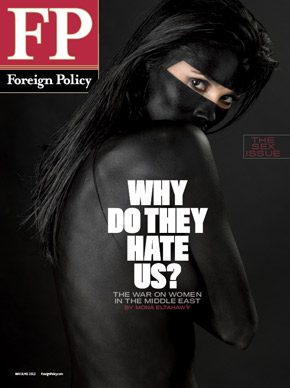
But, what’s worse is that this is the same regime that has violated so many women, including with the atrocious “virginity tests” of detainees, and then recently acquitting the “doctor” who performed them.  Under the watch of this regime, women have been assaulted with what can only be described as gang rape.  From Egyptian women, to foreign correspondents, like Lara Logan, working for the news media, all have been victims of these vicious assaults.  And remember the young woman wearing the blue bra?  Her brutal beating and stripping was caught on video.  This regime is also responsible for the deaths of many innocent people.  This regime has also tried repeatedly to undermine the pro-democracy movement, at times in the most ominous and sinister ways.

And yet, we reward them with $1.3 billion in military aid?  That’s absurd.

Supposedly, this deal has to do with preserving the “integrity” of the 1978 Camp David Accords, the Egyptian-Israeli peace agreement signed between the late President Anwar al-Sadat, Israel’s Prime Minister Menachem Begin, and mediated by US President Jimmy Carter.  The accords led to a cold peace, rather than warm normalization of relations between Egypt and Israel, but nonetheless, it has prevented the outbreak of hostilities over the years.  That might the key ingredient that matters most to the US and Israel right now.  The accords have come with years of US foreign aid to Israel, the top recipient, followed by Egypt.  However, it’s hard to convince me that there are no alternatives to dumping more money in the laps of the military generals in Egypt, especially in the current political climate.

Democratic Senator Patrick Leahy agrees.  According to Al Jazeera

“Patrick Leahy, the Democratic senator who sponsored the legislation that tied conditions to aid [to Egypt], said he was ‘disappointed’ by Clinton’s decision.

‘I know Secretary Clinton wants the democratic transition in Egypt to succeed, but by waiving the conditions we send a contradictory message,’ Leahy said in a statement.

‘The Egyptian military should be defending fundamental freedoms and the rule of law, not harassing and arresting those who are working for democracy,’ he said.

Now that she has taken her decision, he said, Clinton should release funds in increments as Egypt demonstrates its commitment toward democracy following the revolution that overthrew former president Hosni Mubarak in February last year.”

Meanwhile, an Egyptian military court has acquitted and will release Ayman Zawahiri’s brother, Mohammed Zawahiri, along with a militant convicted of planning attacks in Egypt, Mohammed Islambouli, brother of Khaled, who killed Sadat.  According to Dawn Newspaper –

“In 1998, Zawahiri and Islambouli were sentenced on charges of undergoing military training in Albania and planning military operations in Egypt.

…The trial also acquitted several other former militants, including Sayyed Imam Fadl, once the spiritual leader of the Egyptian Islamic Jihad and mentor of Ayman al-Zawahiri.

But Fadl, like the others acquitted, had shunned violence in the late 1990s and engaged in a war of letters with Ayman al-Zawahiri, denouncing Al Qaeda’s use of violence.

Islambouli returned from exile in Iran after a popular uprising overthrew president Hosni Mubarak in 2011, joining a number of Egyptian Islamist militants returning to the country after the ouster of their nemesis.”

For each baby step forward, there are giant leaps backward.  And, while militants, or supposedly “ex-militants,” are being acquitted and released, the worst of the violators of women and men continue to never see the inside of a jail cell.  This is contrary to American values of human rights and justice, and by giving the military junta money, we are sending the wrong message.  Have we learned nothing since the Cold War?

NOTE:  Everything I write in this blog constitutes my personal opinions and views.


Tunisia’s Secret Weapon for Success: Women

8 03 2012


Happy Women’s Day!

It’s not difficult for me to assess a simple yet significant element in Tunisia’s progress and future success as a flourishing democracy.  It was very noticeable and visible in the public sphere:  the empowerment and integration of women into society.

Renowned economist Amartya Sen contends that no society will progress to its fullest potential without freedoms.  And freedoms must facilitate mobility and empowerment of all segments of society.  In Tunisia, I could see how comfortably and routinely men and women interact and give each other space in the public sphere.  It’s not a perfect gender mainstreaming model, but it is by far one of the most progressive that I’ve seen throughout my travels in the Middle East.  Tunisia still has a stream of conservatism, but the cosmopolitan north, including the capital Tunis, and upscale areas like La Marsa and Gammarth, and even the older quarters like Medina and Bardo, all teem with women and men from all walks of life working, walking, driving, and directing.  I saw three female traffic police directing traffic in Bardo, and I also saw a woman in military uniform walking in Medina.  I saw a woman waitress in a traditional cafe in Bardo, where all the patrons, besides me, were men.  I met a dynamic young fashionista with a red bow in her hair, riding the tram and speaking to me in English.  She is studying fashion at the local university.  And, I sat in the audience when Rashid Ghannouchi, head of the ruling En-Nahda Party, spoke at the Center of the Study of Islam and Democracy (CSID) in Tunis, and during Q&A a famous diehard feminist came to the mic and pounded the podium, expressing her concerns about the Islamization of Tunisian society.

Tunisia must continue to embrace progressive gender parity.  Failing to do so will be the failure of the Tunisian model.  The rest of the regional actors should learn from this model, if they wish to succeed in their post-dictator political and socioeconomic systems.

NOTE:  Everything I write in this blog constitutes my personal opinions and views.


The Tunisian Model: A Promising Outlook

5 03 2012

I spent the last week in Tunisia and returned last night.  One year after the revolution, Tunisia looks impressive, and the outlook for the country’s economic and political development seems promising and bursting with potentials.  Tunisia is not without problems and bumps in the road to formulating some sort of hybrid Islamic democracy, although no one expects a smooth glide to post-revolution successes in all aspects of society.  That would be naïve for sure.

Tunisian nationalist pride is evident everywhere, and in terms of economic health, one notices construction projects proliferating the skyline in Tunis and elsewhere.  The souk (market) in the old quarter of Medina in Tunis is bustling with activity, but the number of tourists is still not up to standard.  Clearly, the usual crowds of foreigners filling the Tunisian streets and major sites are missing, and this is cause for worry, as the Tunisian economy relies heavily on tourism.  It is not peak tourist season yet, as that happens in the warmer summer months.  But still, people are anxious about uncertainties ahead and the ability to draw foreign investments and tourists.  French and German businesses are quite active in Tunisia, hiring young, tech-savvy Tunisians.  A Gulf-based Islamic bank has been built in Tunis.  The foreign investments are trickling in, but there is still a greater need for more.

The infrastructure functions well, despite the revolution’s overwhelming impact.  Locals informed me that the electricity never shut off, and water keeps flowing in the tap.  There is still unemployment and in the south one finds poverty and labor disputes, plus the grape vine reports serious concerns about Libyan migrants and some unsavory characters crossing into Tunisia from the Tunisian-Libyan border.  In general, Tunisia finds herself at a crossroads:  from reading the locals’ faces, it appears that for the most part everyone is very pleased to see the former dictator Ben Ali go.  Yet, there is anxiety about the way ahead, but nothing like the tension we find in Libya and Egypt.  Tunisia even prides herself as the potential future model for the Arab Middle East, whereas at one time the “Turkish model” was cited.  Tunisians see themselves as the torchbearers.

In order for Tunisia to truly live up to that image, the post-revolution government will need to develop effectively, particularly focusing on employment demands and improved income distribution.  The degree of corruption in the Ben Ali era has left an indelible mark on the Tunisian people, and they are firmly determined never to allow that to happen again.  Many political institutions remain intact, which, one scholar tells me, will allow the future government to function well.  They won’t have to rebuild institutions from square one.  The constitution is still being drawn up, but some speculate that it might be completed within a year.

Of course, there are still some Ben Ali era elements lingering within Tunisia, and I was even told that some Qaddafi family members have fled into the country as well.  These elements only add to the collective anxiety, but overall, Tunisia appears to be on the road to political development and long term prosperity.  These processes will take time, and the Tunisians are very much aware of that.  Everyone I spoke to expressed great optimism, and some even expressed Tunisia’s trailblazing role in triggering the regional uprisings as also a sign that Tunisians will serve as the role model for the post-dictatorship governments to follow.  Right now, Tunisians are sorting out what that model will look like – secular liberal democracy, or some combination of Islam and democracy – and while the subject may be contentious, the discourse and debates I observed were nothing less than civil and respectful.  One year later, Tunisia is deeply and collectively introspective, and may eventually emerge as the model for the region to follow.

NOTE:  Everything I write in this blog constitutes my personal opinions and views.


Rumble in the Syrian Jungle

20 02 2012

What’s happening now in Syria is increasingly complicated.  Urban warfare is difficult and costly, as countless civilians pay the ultimate price for indiscriminate shelling and armed attacks in residential areas.  Numerous YouTube videos continue to show such indiscriminate shelling in residential areas.  A severe humanitarian crisis is emerging in some Syrian cities.

While no one should discount the loss of civilian life in Syria on a daily basis, US Chairman of the Joint Chiefs of Staff (CJCS) Gen. Martin Dempsey is correct (in terms of tactical assessments) to point out that, according to Al Arabiya News paraphrasing him:  “Syria was the focus of competing Middle Eastern states, notably Iran and Saudi Arabia, and posed different problems for the United States than Libya did.”

In other words, Syria is now the “rumble in the jungle” for a number of external powers, seeking to realize their own interests and agendas for a post-Bashar al-Assad Syria.  I wrote about this in a previous blog post, “The Saudi Specter in Syria and the World.”  What this means is that Syria is now the multidimensional chessboard for internal and external players, not unlike the case of the Lebanese civil war (1975-1990).

Says Gen. Dempsey:  “There’s indications that al-Qaeda is involved and that they’re interested in supporting the opposition. I mean there’s a number of players, all of whom are trying to reinforce their particular side of this issue.”

While I cannot independently verify the presence of Al Qaeda in Syria (although last week Ayman al-Zawahiri issued a video calling on Muslims to support the Syrian rebels against Assad), clearly there are many hyena packs lurking in and around this jungle.  The hyena Assad is not alone in his pack.  Various other hyena packs also roam in the darkness, including Iran, Hezbollah, Russia, and China, and perhaps numerous proxies, and we cannot dismiss the respective interests and agendas of Lebanon, Israel, Iraq, Jordan, Turkey, European powers, and the United States.  Continuing with Gen. Dempsey’s assessment:

“Dempsey identified ‘a Sunni-Shiite competition for, you know, regional control,’ of Syria being played out between Saudi Arabia and Iran as a key barrier to U.S. intervention, as well as Damascus’s ‘very capable’ military. 

They have a very sophisticated, integrated air defense system. They have chemical and biological weapons. They haven’t demonstrated any interest or any intent to use those, but it is a very different military problem,’ Dempsey said, noting he had not yet been asked to provide U.S. military options on Syria.

… ‘It was a big mistake to think of this as another Libya’, he added.”

Meanwhile, on February 24 a meeting of various global diplomats will convene in Tunis, supported by the Arab League, to discuss support for the Free Syrian Army and provide humanitarian relief to civilians.  Interestingly, the Free Syrian Army has its own Facebook (FB) page, and also its opponents have set up a FB page called “Eliminate the Free Syrian Army,” and in parentheses you see “(Al Qaeda Army),” so it appears as:  “Eliminate the Free Syrian Army (Al Qaeda Army).”

Therefore, the cyber battle and diplomatic maneuvering all mirror the ongoing conflict inside Syria.  This is an example of modern, literally multidimensional conflict, which includes cyberspace.  Sadly, what gets lost in the messages is the ability for the rest of the world to extract the “TRUTH” behind the rhetoric and fog of war.

Moreover, as an international affairs analyst, I cannot fail to be mindful of the parallel crisis involving Iran’s nuclear program, and how elements of the power play between all of these players are seeping into the Syrian jungle.  Gen. Dempsey referred to Iran as a “rational actor,” in terms of how the regime calculates its courses of action.  That’s the basic presumption of state actors in international relations, but often states cross the line of rationality, like Assad’s regime, in the zeal for power and power projection.  In the end, they only end up looking like bloody-fanged hyenas.

NOTE:  Everything I write in this blog constitutes my personal opinions and views.