Beating Back the Sharia Bullies in Mali

22 02 2013

Mali Sharia Cartoon

Amputee Mali

ansar-dine

It’s amazing that some people protested against the French-led campaign in Mali.  Surely the French have a host of national interests in doing so, including sustaining ties to its former colony.  No one is naïve enough to believe that it was done out of true altruism.  But at the same time, given what the Sharia bullies who ransacked their way through northern Mali and threatened the capital had done to the locals, the French should be applauded.

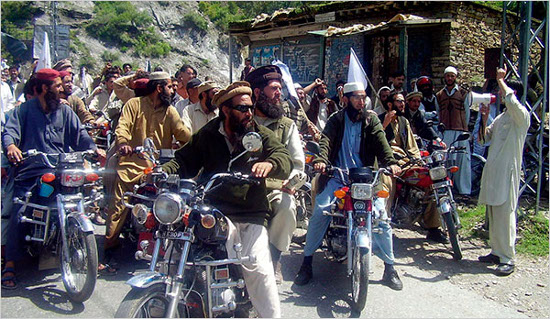
Tuareg rebels who had long been Libyan leader Colonel Qaddafi’s allies grabbed their weapons and fled to Niger and Mali in 2011 after their benefactor’s demise.  Together with Islamist extremists, they overran the Malian military, and the hard-line Al Qaeda in the Islamic Maghreb (AQIM) affiliated Islamists implemented harsh Sharia laws particularly restricting women.  They demanded women to cover up and not be in public without a male chaperone, and to cardboard windows in their homes.  They even turned against their Tuareg comrades and violently drove out anyone among the Tuareg rebels who didn’t join them.  Islamist extremists meted out extrajudicial executions, stonings, whippings, amputations, and other forms of violent punishments with no due process.  A man amputated his brother’s hand; a couple was stoned to death for “adultery;” and countless people have been whipped, humiliated, and bullied in public by bearded Taliban-like extremists alongside Kalashnikov-wielding adolescents.

Hundreds of thousands of Malians have fled as refugees.  The refugees say that they fear the extremists, and economic activities are at a complete standstill thanks to the extremist thugs.  A humanitarian disaster has ensued.  In addition to their brutal treatment of fellow moderate Muslims, the extremists have destroyed centuries-old UNESCO heritage sites, including mosques and important Sufi mausoleums in Timbuktu, and they have burned irreplaceable old manuscripts in historical libraries.

Spiegel Online (October 29, 2012) describes “A Trip through Hell: Daily Life in Islamist Northern Mali”, starting with a checkpoint on the road to Gao:

“Adolescents wielding Kalashnikovs stand at the barrier with their legs apart. The oldest one keeps repeating the same instructions through a megaphone: ‘No cigarettes, no CDs, no radios, no cameras, no jewelry,’ an endless loop of prohibitions, a list of everything that’s haram, or impure, with which this journey to the north begins. The men stand guard in the name of the Prophet Muhammad.

…  The Sharia court uses a former military base outside the city to carry out its grisly punishments. One of its victims is Alhassane Boncana Maiga, who was found guilty of stealing cattle. Four guards drag Maiga, wearing a white robe, into a dark room and tie him to a chair, leaving only one hand free. A doctor gives the victim an injection for the pain.

Then Omar Ben Saïd, the senior executioner, pulls a knife out of its sheath. ‘In the name of God, Most Gracious, Most Merciful,’ he calls out, takes the convicted man’s hand and begins to slice into it, as blood squirts out. It becomes more difficult when Saïd reaches the bone, and it’s a full three minutes before the hand drops into a bucket. The executioner reaches for his mobile phone, calls his superior and says: ‘The man has been punished’.”

A few days later Maiga died, possibly from infection.

The Islamic extremists consist of a mix of different groups, including a fairly new one called Ansar al-Dine (“Defenders of the Faith”), which collaborates with AQIM and also is involved in the Saharan drug trade.  Ansar set up shop in the city of Kidal, where –

“Islamic police in pickup trucks patrol the streets. The market is closed, and women are no longer permitted to go out in public alone in the city.  The men were instructed to grow beards. Those who do not obey the muezzin’s call to prayer are either whipped or jailed for three days. Listening to the radio is banned, and the new rulers have simply sawed off satellite dishes on the roofs of houses.

… “Those stupid Salafists,” [says a Kidal resident].  He refuses to take them very seriously and isn’t fooled by their piety.  He calls them bandits, not holy warriors.

… The Islamic police are everywhere … There are more than 20 ethnic groups in Mali, and until now, Muslims, Christians and animists coexisted peacefully. Religion was always a private matter … the people of Kidal are tired of being pushed around by adolescents [with Kalashnikovs].”

Those who so vocally espouse the brand of Sharia that the Mali terrorists wield should spend a day under their ruthless rule.  Then let’s see who will be crying for someone to rescue them.

NOTE:  Everything I write in this blog constitutes my personal opinions and views


The Militant Sunni Juggernaut & the Anti-Shia Hatred that Fuels It

10 01 2013

NYT2009041617260562C

Lashkar-e-Taiba

Stop Shia Killings

“Yes, we must finish them off.”  This was the response when someone from one of the Gulf Arab countries (to remain nameless) was asked about going after (i.e., killing) Shias following Bashar al-Assad’s fall in Syria.  I have predicted a Shia massacre, I even called it a genocide, in a post-Assad Syria.  This quote only confirms my fears and suspicions.

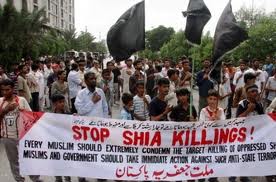
 Twenty-four hours after I heard this quote the vicious killings of mainly Hazara Shias in Pakistan took place in Quetta.  Ongoing violence in Iraq continues to target Shias there, and the Sunni-Shia hatred and violence in Syria has already spilled over into Lebanon, where they tortured and slaughtered each other with relish during the civil war (1975-1990).

 Ironically, it is the majority Sunnis in the Middle East, especially in the Persian Gulf region, and parts of South Asia who sing the victim songs about how Iran is trying to “spread its ideology” and subjugate them all.  There is no denying that upon Ayatollah Khomeini coming to power in the 1979 revolution, one of his expressed priorities was to spread the Islamic revolution throughout the region.  However, given the fact that the vast majority of the regional demographics consists of Sunnis – with exceptions in Iraq and Bahrain – the fear of the successful spread of Twelver Shia ideology is unsubstantiated and grossly overblown.  And the regional actors know this.  Yet, they continue to fan the flames of sectarian hatred and fear.  I have come across numerous Sunnis from the Gulf region who don’t hesitate to judge Shias as “non-believers,” or “non-Muslims.”  Surely they have their counterparts among Shias, but Shias are greatly outnumbered, and in fact in Sunni majority countries they face increasing discrimination, prejudice, and even violence, not unlike many Christians in the Middle East and Hindus, Bahais, Ahmadis, and a host of other minority groups in Pakistan.  We must add girls and women too, but gender violence is a whole other can of worms.  I predict that persistent gender violence will trigger the true downfall of these regions, if they don’t get their acts together to protect girls and women.  But, that topic is for another article.

As much as we can try to attribute the recent attacks in Pakistan to what’s to come with US troop withdrawal in Afghanistan, the fact is that systematic targeting of Shias has been going on for a long time now.  Many refer to it as the “Shia Genocide,” and there is basis for this term.  Just look at the number of deaths and injuries, and frequency of attacks, which have been rising steadily in recent years.  The Pakistani government is unable (and unwilling?) to enforce law and order in general, let alone pertaining to sectarian massacres.  It seems not only helpless, but also oblivious in many ways, and that will be to Pakistan’s detriment, as if matters can get any worse.  And, with Pakistan, it’s not just the internal violence that is sucking the country into its own self-constructed black hole, but it seems the military is itching for a fight with India again with the border skirmishes in Kashmir’s LOC.  There is a real potential in the coming months and maybe year or so for the Pakistani military to step in completely and carry out yet another coup, especially now that the US will be less active in the region.  If things get even uglier with the Indo-Pak skirmishes, the Pakistani military just might see that as an opportunity to make its move on the Zardari government.  Let’s see what happens.  My predictions are not always right, but who knows what’s around the corner for the Af-Pak region?

 The outlook for these regions is grim, especially given that law enforcement cannot provide basic security for the general public.  Plus, rule of law practically does not exist, and if it does, it’s usually in favor of the wealthy and powerful elite.  Meanwhile, the bloodshed continues with impunity.

 While I in no way support the brutal Iranian regime (which also viciously represses its own minority groups), as a political scientist, I can assess that, with all these targeted Shia killings proliferating in the Middle East and Pakistan, and the inevitable fall of Bashar al-Assad in Syria (Iran’s only strong ally in the region), the clerics in Tehran can only see more reason to weaponize their nuclear program.  Ominously, that will result in a domino effect with the rest of the region acquiring the same nuclear status.  That is for certain.  Then, we will witness the Sunni-Shia rivalry armed with nuclear weapons.  That is one very scary thought.  But, since the regional governments do nothing to prevent the sectarian bloodshed now, that is the outlook we can expect in the future.

 The governments in these regions need to wake up to these dark realities.  They are so preoccupied with their own prejudices and self-interests, but this is truly at the expense of the masses.  Nothing can be gained from all the violence at the hands of militants, regardless of their sectarian identities and ideological orientations.

 The other open secret that everyone sees, but has not received due attention, is that most of the militants in these regions are hard-core Sunni extremists.  With all the fear mongering about Iran spreading its ideology, the majority of violent acts being carried out from North Africa, in the Middle East proper, and in Pakistan, Afghanistan, and Kashmir are at the hands of Sunni militants, primarily espousing some form of Salafism, and many of whom, if not most, are supported financially by the Saudis.  When we peel back the layers of political, military/security, financial, and other variables in this scenario, we see that at the core of it all is the Sunni-Shia rivalry (i.e., Saudi versus Iran).  These militants have many other motivations and agendas as well, but one of the main priorities they embrace is to “cleanse” their societies of Shias and other minority groups.  The Taliban committed horrendous Shia massacres during their rule in Afghanistan.  This is nothing new.  The only thing that is new and alarming is the militant Sunni juggernaut sweeping across these regions unchallenged.

 NOTE:  Everything I write in this blog constitutes my personal opinions and views


Turmoil in Egypt: Morsi Doesn’t Know How to Play Chess

11 12 2012

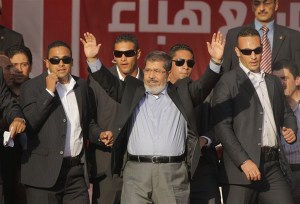
Morsi pic

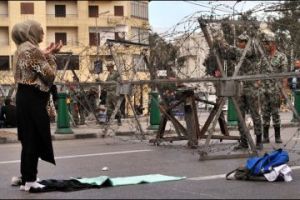
egypt_protests_presidential_palace_tear_gas_december_4_2012

The current crisis in Egypt is disheartening, to say the least.  The euphoria of the 2011 revolution now seemingly feels like a deflated balloon, and the violence and ongoing protests illustrate a highly polarized society with inflamed passions, emotions, and fears.  The fears are warranted.

Amid the passions and emotions is tremendous confusion about the way ahead for Egypt.  This is while the masses of educated youth remain jobless, President Morsi is about to raise commodity prices, labor disputes and law and order issues have yet to be resolved, the military waits in the wings to assess the next move, political developments are arrested and left in limbo, Coptic Christians, secularists and women are terrified with the prospects of increased implementation of Islamic laws in social policies, the environment continues to be neglected and degraded, water sources and sanitation systems are in disrepair, the education system’s deficiencies and illiteracy rates are abominable, women continue to suffer sexual assaults, and national and regional security remains fragile and threatened by diverse unsavory elements.

Morsi’s moves within the last few weeks have illustrated two attributes of his leadership and agendas:  first, he seems to lack the skills to out-maneuver the judges (who are carry-overs from the previous regime), hence his political chess skills are lax.  Second, Morsi got carried away with his newfound powers, and his over-confidence betrayed him and the country.  Perhaps it was part of his plan or agenda to bulldoze himself over all the branches of government, as pronounced in his decree, which later he was forced to retract.  Perhaps, in the shadows, this has been the Muslim Brotherhood’s (MB) agenda all along.  The greatest error was believing that he could get away with it.  Egypt is no longer the decades-long repressed and abused poor masses with a metaphoric pharaoh’s foot on their necks.  Today’s Egypt is a liberated, tech-savvy, and obstinately freedom loving youth, and a host of countless activists who have embraced the mantra “never again.”  Morsi and company need to acknowledge that the freedom-and-rights-Genie is out of the bottle.  Failure to do so only spells their own demise and delegitimized status.

What will unfold in the coming days, weeks, and months in Egypt is yet to be determined.  But one thing is for sure, if the Morsi government fails to tackle the real bread-and-butter issues in Egypt, and fast, his term in office will be extremely brief.  Why religion is presented as a public policy priority, when the people’s main priorities consist of putting food on the table and supporting their families, is beyond comprehension.  If Morsi has paid any attention to the causal factors behind the Tunisian Revolution, as well as Egypt’s revolution, he would know that the main variables and grievances were socioeconomic, not religious.  It seems he was more focused on his hunger for power, rather than the people’s hunger for food.

I close with a compelling quote by James Madison:

“The accumulation of all powers, legislative, executive, and judiciary, in the same hands, whether of one, a few, or many, and whether hereditary, self-appointed, or elective, may justly be pronounced the very definition of tyranny” – James Madison, Federalist No. 47.

NOTE:  Everything I write in this blog constitutes my personal opinions and views


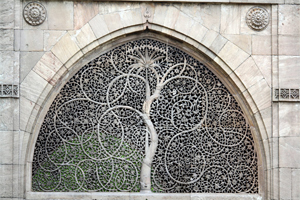
Shah Wajihuddin Alvi Darga in Ahmedabad – Sameer’s Blog Post

23 11 2012

Please take a look at Sameer Khan’s latest blog post about the Shah Wajihuddin Alvi darga (shrine) in Ahmedabad, Gujarat, India:

http://sameerspen.wordpress.com/2012/11/23/tomb-of-hazrat-shah-wajihuddin-alvi-ahmedabad/

If you’re a historian, or have interests in South Asian history, you will find this interesting.


DIME+E and The ABCs of Fighting Religious Extremism

15 11 2012

Please read my article in the Tampa Tribune:  “The ABCs of Fighting Religious Extremism”

http://www2.tbo.com/news/opinion/2012/nov/15/naopino2-the-abcs-of-fighting-religious-extremism-ar-564781/

This article introduces the (copyrighted) concept (my idea) of DIME+E, the second ‘E’ refers to EDUCATION.


Women in Afghanistan – Journal Article

13 11 2012

The Middle East Review of International Affairs (MERIA) journal has published my article, “Women in Afghanistan: A Human Rights Tragedy a Decade after September 11” –

http://www.gloria-center.org/2012/11/women-in-afghanistan-a-human-rights-tragedy-a-decade-after-september-11/

Also published by the Revolutionary Association of the Women of Afghanistan (RAWA), thank you RAWA:

http://www.rawa.org/temp/runews/2012/11/12/women-in-afghanistan-a-human-rights-tragedy-a-decade-after-september-11.html


JPost Oped – Obama’s Dilemma: Egypt is Looking More Like Pakistan

12 11 2012

Here’s my latest Jerusalem Post opinion piece, “Obama’s Dilemma:  Egypt is Looking More Like Pakistan” (Nov. 12, 2012) –

http://www.jpost.com/Opinion/Op-EdContributors/Article.aspx?id=291539


Sultan Ahmed Shah Mosque in Ahmedabad

8 11 2012

Please read the article about the Sultan Ahmed Shah Mosque in Ahmedabad, and check out the pics:

http://sameerspen.wordpress.com/2012/11/07/sultan-ahmed-shah-mosque-in-ahmedabad/


Sameer Khan’s Blog

1 11 2012

Check out Sameer Khan’s Blog, especially the latest posting about Bhopal’s Taj Mahal:

http://sameerspen.wordpress.com/

The Taj Mahal of Bhopal – A Sad Story:

http://sameerspen.wordpress.com/2012/11/01/taj-mahal-of-bhopal-a-sad-story-of-neglect-and-apathy/


Islamic Extremists’ Propensity for Violence & Intolerance

31 10 2012

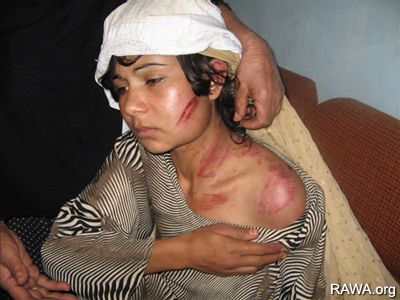
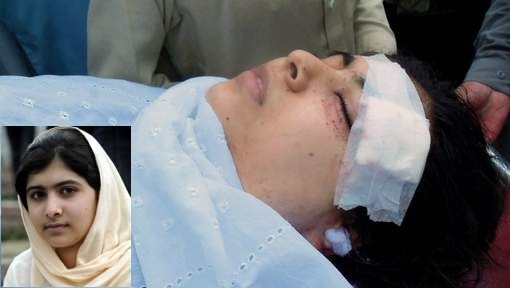
The shooting of the brave Pakistani teenager, Malala Yusufzai, underscores a reality, without exaggeration, about the degree and severity of misogyny of Islamic extremists.   The shooting, which the 14-year-old activist and campaigner for girls’ education survived, is an ever-growing stain on Pakistan’s fabric of militancy and mindless misogynist orthodoxy.  The list of threats and violence against women and liberal voices is long.  This week BBC profiled an Afghan female rap artist, who is a proud patriot, yet receives regular threats by militants, including threats of acid attacks.  In Dagestan, militants murdered the fourth Sufi cleric this year.

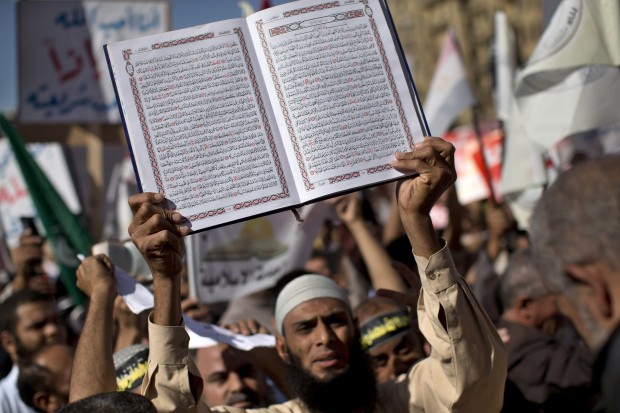
What drives these hyenas to commit senseless acts of violence against innocent civilians and even children?  Are they so threatened by girls that they have to resort to such tactics as acid attacks and shootings of school buses?  Is this what their seminary curricula have taught them, to hate everyone who doesn’t conform to their own way of thinking, and to fear girls, especially educated ones?  I once reprimanded my students for using the word “barbaric” for the Afghanistan-Pakistan region, but now I lament my actions.  The behavior of these militants and extremists, which are not restricted to the Af-Pak region, is beyond barbaric.  They transcend the Dark Ages in their regressive madness and extremes.  They make me hate the news and cringe every time I reach for BBC or NPR.  They are a dark cloud hovering ominously over the “modern” Muslim world today, and sadly many Muslims remain defensively in denial or apologetically rationalize the existence of these ugly elements, or re-frame Shariah (Islamic law) to distance themselves from such ideologies.

If so called moderate and liberal Muslims fail to acknowledge the reality of these extremists and their agendas, and, more importantly, fail to counter these militant and extremist forces in their midst, dire consequences await Muslim communities worldwide.  Some of these consequences are already occurring, including:

  • Hijacking and undermining children’s education systems, in the guise of “religious education,” by the infiltration of extremist and ultra-orthodox ideologies that promote intolerance and potentially militancy.  Such ideologies include Wahhabism and Salafism;
  • Stifling of liberal and Sufi voices and practices, as well as destruction of religious sites, as in the case of Salafi destruction of Sufi shrines and UNESCO heritage sites in recent months in Mali and Libya;
  • Attacking and killing non-Muslims in the name of Islam, as in the case of Boko Haram killing Christians and attacking churches in Nigeria;
  • Increasing the oppression of girls and women and religious minorities, as well as religious pariahs (e.g., sectarian groups like Shiites, and religions like Bahaism), and denying their rights and freedoms;
  • Stoking anti-Americanism, anti-Westernism, anti-modernism, and anti-Jewish and Christian sentiments, again in the name of Islam;
  • Undermining democratization and socioeconomic progress, especially by means of suppressing segments of society like women and minority groups;
  • Repressing intellectual freedoms and the arts;
  • Arbitrarily invoking takfir (calling someone a non-believer, or an apostate) and blasphemy labels, resulting in excommunication or even death of the targeted individual;
  • Questioning modern secular ideas, education, and progressive lifestyles, and seeking to repress them;
  • Locking entire communities in cycles of religious authoritarianism and totalitarianism by use of force or threats of violence, peer pressure, and excommunication;
  • Killing anyone who opposes them;
  • Focusing on nothing but their own myopic concepts of “jihad” and manipulations thereof;
  • Pursuing agendas of territorial expansion, areas of operation, recruitment, and cooptation of local government, law enforcement, and religious officials, where possible;
  • Blaming everything on the US, Jews, and Israel;
  • Interpreting religious laws and principles literally;
  • Attempting to superimpose 7th century ideas and practices on the present;
  • Bullying innocent people into submission and conformity, resulting in religious fascism that does not tolerate dissent, nor does it tolerate women’s rights to choose how they dress, live, acquire an education, work, and marry or divorce.

The end result of this religious fascism is nothing but destructive, oppressive, intolerant, and violent, authoritarian male-dominated communities living anachronistically in a 7th century time warp.  In fact, that itself is an untruth, because much of these extremists’ attitudes and behaviors pre-date Islam.  Yet, they insist on attributing their take on Islam as replicating the time of the Prophet Muhammad in 7th century Arabia.  Still, even the latter was not such a shining example of women’s emancipation and rights, certainly not by modern standards, nor was it brimming with religious tolerance and harmony.  Pre-Islamic Arabia fared even worse of course, but to compare these historical contexts to modern times is a non-starter.  Hence, the extremists’ backward regression is far worse than anticipated.  We all thought the Taliban were the worst when they emerged in the 1990s, but now they have parallel groups and ideologies that mirror them in many respects.  And we have the Saudis to thank for the proliferation of Wahhabi / Salafi ideologies that are inspiring these extremists and militants.

Last year and even earlier this year, I had high hopes for post-revolution political and socioeconomic development in Tunisia, where the 2011 Arab Awakening began.  Now, Salafist thugs are threatening to derail stability and security in Tunisia, while continuing their violent agendas and attacks.  Even as recent as October 31st, there have been fierce clashes in Tunis, as Al Jazeera reports:

“Wielding sharp tools and swords, the protesters went on the attack in the Tunis suburb of Manouba after police arrested a Salafist suspected of assaulting the head of the suburb’s public-security brigade, Khaled Tarrouche, interior ministry spokesman, said.

‘There has been a reinforcement of security, of the National Guard, of the army to prevent any retaliation’ by the Salafist movement, Tarrouche said on Wednesday.

‘The response by the security forces led to the death of an attacker who was hit by a bullet.’

Two security force members were also seriously injured, he said.”

These extremist elements are enemies of knowledge.  They are haters of peace and harmony.  They are the most intolerant towards tolerance.  Muslims must not bury their heads in the sand about this.  There is way too much at stake.

NOTE:  Everything I write in this blog constitutes my personal opinions and views